China’s AI Trade Has Crashed; Beijing Is Trying to Stop the Stock Rout
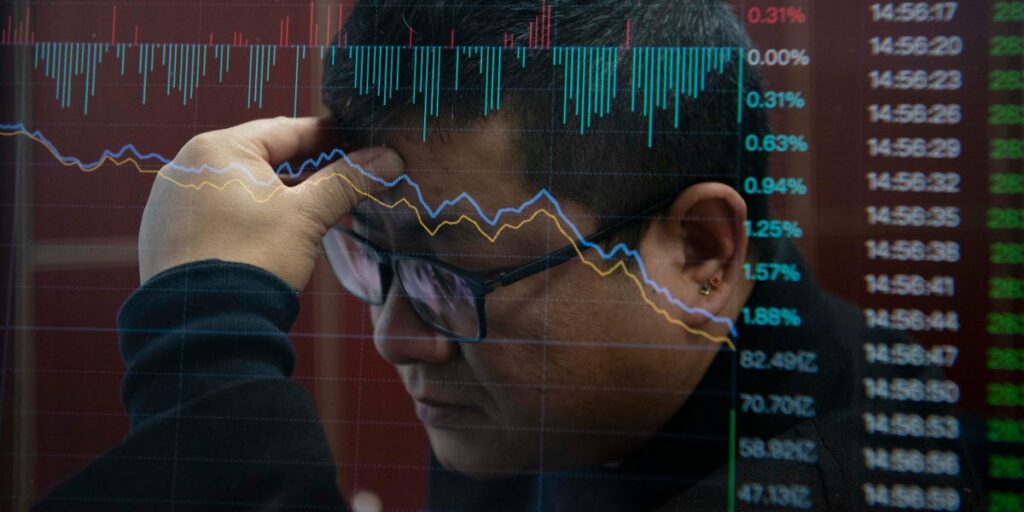
China is stepping up efforts to shore up its stock market after a sharp reversal in the AI trade sent technology stocks tumbling.
On Monday, Beijing announced a new round of central bank swap operations to support stocks, saying 31 securities firms and fund managers had applied for more than 100 billion Chinese yuan, or $15 billion, in liquidity support.
Authorities also lowered financing costs for share buybacks and encouraged major technology companies to repurchase shares.
But the measures have yet to sustain a rebound.
After gaining Monday on expectations of government support, Chinese stocks came under renewed pressure Tuesday. The benchmark CSI 300 closed little changed, while the Shanghai Composite fell 1% and the tech-heavy STAR 50 slid 4%.
China’s AI rally unravels
The downturn marks a sharp reversal from a rally fueled by Beijing’s September 2024 stimulus push and later by investor enthusiasm for Chinese AI and semiconductor companies.
By late October, the STAR 50 — which includes major semiconductor companies — had plunged roughly 40% from its midyear peak, erasing about $480 billion in market value, according to Reuters’ calculations.
China’s broader CSI 300 index fell 8.5% in October, its steepest monthly decline in more than a decade.
The selloff has compounded pressure on Chinese stocks from a prolonged property downturn, weak consumer spending, and sluggish economic growth.
Unlike Beijing’s sweeping September 2024 stimulus push, the latest measures appear aimed at stabilizing the market rather than engineering another rally, according to analysts at 22V Research.
“We regard these various developments as intended to put a floor under markets,” wrote Michael Hirson and Houze Song in a note on Monday.
The analysts added that the liquidity support could help break a cycle in which investment firms are forced to sell holdings to meet investor withdrawals.
However, liquidity was just part of the problem.
They pointed to weak domestic growth, waning optimism about US AI capital spending, which had helped drive some of China’s hottest technology stocks, and disappointment with the pace of domestic technological progress.
“With this backdrop, we are skeptical that the authorities will attempt to engineer a broad-based rebound in equities, akin to the 2024 pivot, which would require more powerful tools than have been signaled to date,” they wrote.