What Fleet Fires Really Cost
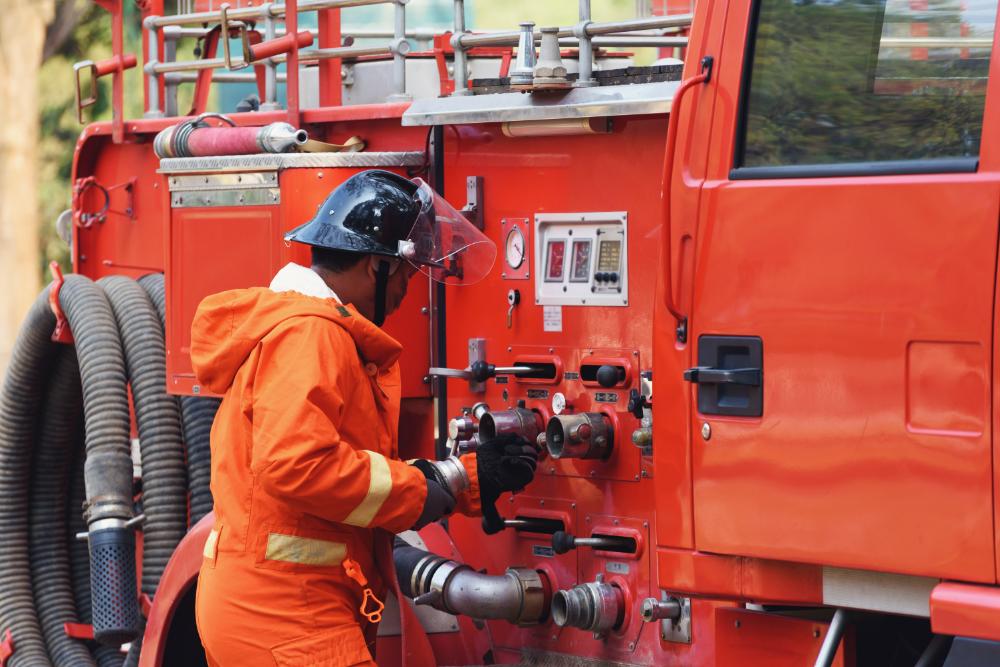
What Equipment Fires Really Cost Businesses
An equipment fire rarely costs only the machine. Replacement, lost production, float charges, cleanup and the deductible land in the same quarter, and the schedule behind that unit slips with it. Sound fleet risk management treats the engine compartment as the first hazard, pairing automatic detection inside sealed enclosures with an agent that leaves hydraulics and wiring serviceable and keeping the inspection file current.
Introduction
Hydraulic fluid atomized onto a turbocharger housing ignites well below the temperature that housing reaches in normal operation. The repair invoice is the smallest line in what follows, because replacement iron, a stalled contract, a safety investigation and a closely read claim file all land while the hole in the schedule is still open. Fleet risk management now belongs in the capital budget as much as in the safety manual. Effective Equipment Fire Prevention helps reduce the risk of engine fires, costly repairs and unexpected equipment downtime.
Across Alberta and Saskatchewan, that protection is specified, installed and serviced by firms such as Tagon Monitoring Solutions, which engineer each layout around the machine’s fuel load and its enclosed spaces. What happens after the installer leaves decides whether the spending returns anything. An unserviced cylinder, a corroded detection line or a lapsed inspection tag leaves a unit protected only on paper. Regular maintenance is essential for effective Equipment Fire Prevention and long-term fleet protection.
The Real Price of Skipping Equipment Fire Prevention
Fire cost analysis usually stops at the machine. The accounts carrying the rest of the loss belong to other departments, which is why the full figure is almost never assembled in one place.
The First 48 Hours After a Machine Burns
Most of the decisions that set the final figure are made inside those two days. Work around the unit halts while the cause is established, a float is booked to haul away what remains, and every task sequenced behind it slips. Replacement iron on short notice rents at whatever the market asks that week, assuming a comparable machine sits within reach of the site. In practice, the schedule takes the hit long before the shop does. Effective Equipment Fire Prevention helps minimize downtime and keep fleet operations on schedule.
Costs That Never Reach the Repair Invoice
Repair and replacement are the two figures everyone captures. The rest of the loss disperses into ledgers that are never totalled against the incident:
- Lost production hours across every crew waiting on that unit
- Short-term rental at spot rates, plus mobilization and demobilization charges
- Supervisor and safety-officer time absorbed by investigation and reporting
- Site cleanup and disposal of spilled fuel, hydraulic fluid and contaminated soil
- Premium adjustment at renewal, carried on the books for several years
Taken together, those lines decide whether the incident shows up as a maintenance entry or a visible dent in the year’s margin.
Where Heavy Equipment Insurance Stops Paying
Settlement follows the valuation basis written into the policy, which means depreciated value on many contractors’ floaters and replacement cost on newer units. Either way, the earnings the machine would have produced sit outside that calculation unless business-interruption cover has been extended to name the asset.
By contrast, protection built into the engine bay is a quoted figure, commonly $10,000 to $40,000 across the full service life of a system, committed before anything happens.
How Detection and Suppression Choices Reduce Equipment Downtime
Two decisions separate a scorched hose from a replaced machine: where the detection line runs, and what leaves the nozzle when it triggers.
Where Fires Start on Working Machinery
The ignition paths repeat across machine types, whatever the badge on the hood.
- Hydraulic lines and fittings spraying onto turbochargers and exhaust manifolds
- Fuel lines, filters and return hoses routed past the engine
- Electrical enclosures, battery terminals and chafed wiring harnesses
- Debris packed against hot components: bark, chaff, coal dust and oily rags
Each one is behind a guard or a panel, which is why the first warning the operator gets is usually smoke, and by then, the compartment has been burning for a while.
Water Mist Measured Against Dry Chemical Agents
The agent chosen decides what the machine looks like once the fire is out.
| Factor | High-pressure water mist | Dry chemical powder |
| Suppression method | Cools the hot surface and displaces oxygen at the ignition point | Smothers flame with a powder cloud |
| Residue left behind | Water and additive, no corrosive deposit | Abrasive, corrosive residue across the compartment |
| Effect on components | Hydraulic seals, sensors and wiring stay serviceable | Accelerated wear on seals, sensors and connectors |
| Approvals available | Systems approved to FM 5970, with DOT, UL and FIA listings for mobile installations | Varies by manufacturer, commonly installed under NFPA 17 |
| Post-discharge work | Clean and inspect the affected area | Teardown and wash-down before restart |
What that comparison produces is a return-to-service figure, and the return-to-service figure is what the project schedule reacts to.
Matching Coverage to the Machine’s Fuel Load
Nozzle count, nozzle aim and the routing of detection tubing are set by the asset itself. A forestry harvester accumulates combustible debris against hot components that a transit bus never sees, and a mining haul truck adds vibration and dust loads that work fittings loose over a season. Installation under HDME safety standards accounts for those conditions, which is why two machines parked on the same site rarely carry the same layout.
The Paperwork Trail Behind Workplace Safety Compliance
A suppression system spends its entire life not being used. The service record is the only evidence anyone has that it still works.
The Service Cycle That Keeps a System Ready to Discharge
Water-mist systems built for heavy equipment carry a manufacturer schedule of three intervals: inspection every year, fluid renewal at five years and a full service at ten. Missing any one of them can void the manufacturer’s warranty. In turn, a machine wearing an expired tag is, for regulatory and claims purposes, a machine with no system on it.
Protective Safeguards Endorsements and What Adjusters Request
Commercial property and equipment policies often carry a protective safeguards endorsement, a clause making coverage conditional on the named protection being kept in working order. A Massachusetts appeals court applied that clause strictly in French King Realty v. Interstate Fire and Casualty, upholding a denied fire claim and ordering the restaurant to return the advance its insurer had already paid.
More often, the question never reaches a courtroom and is settled by what the maintenance records contain.
The records that decide a claim:
- Dated inspection reports for every protected unit, signed by a certified technician
- Fluid renewal and service records measured against the manufacturer’s interval
- Work orders covering repairs to detection tubing, nozzles or the actuation line
- Operator training records showing that manual actuation was taught and practised
Building the Record Before the Loss
Occupational health and safety legislation in Alberta and Saskatchewan requires employers to maintain equipment to the manufacturer’s specifications, so the same inspection reports answer to the regulator and to the insurer. Built month by month, that documentation costs nothing but discipline. Assembled in the week after a fire, it rarely survives a close reading.
Pro Tip: Tie the suppression inspection to service hours instead of a calendar date. A unit sent out on a six-month camp job misses a date-based reminder, and the tag expires in the field where no technician is booked.
Equipment Fire Risk Is Settled Before Ignition
The cost of a machinery fire is determined months earlier, by where detection is placed, what the agent does to the components around it and whether the inspection record is current. Operations that treat suppression as a serviced system rather than a purchased one keep the asset, the schedule and the claim intact. Fleet risk management shows up as dated reports, coverage still in force and a machine back on the job.
Find a Home-Based Business to Start-Up >>> Hundreds of Business Listings.