Tires You Buy In The Future Could Be Made From Dandelions
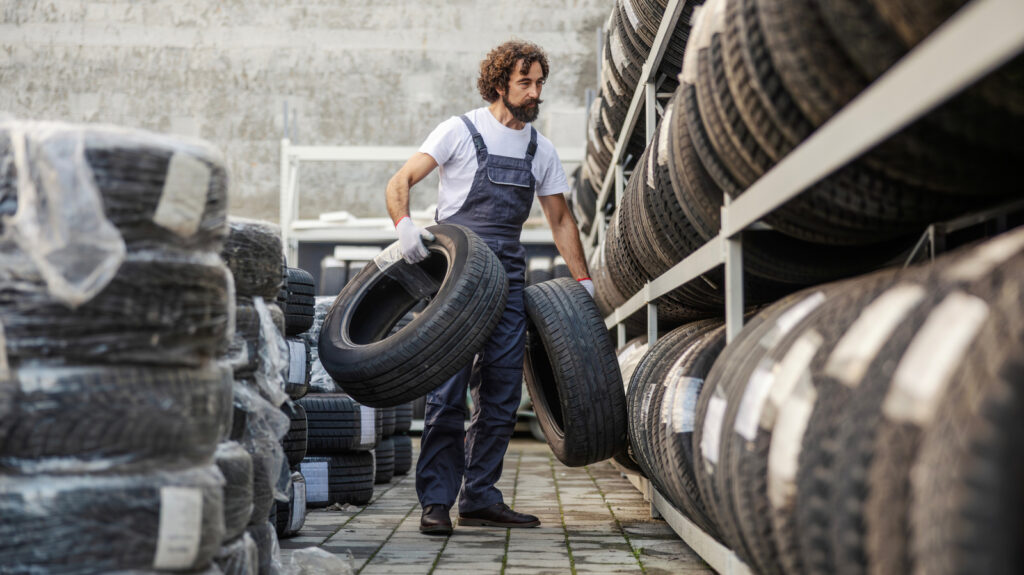
Ever since vulcanized rubber was invented in the mid-19th century, it has been an in-demand material for industries of various kinds. It’s particularly important in tire making, yet despite the huge number of vehicles on the road today, the source of the natural rubber that’s used in tires remains unchanged from the early days of the automobile. Latex is extracted from the rubber tree, which is grown on plantations across Africa, Asia, and South America, then it’s sent off to be processed into rubber before being used in the tire manufacturing process.
Most modern car tires only use a small proportion of natural rubber. The majority of rubber that the tire industry consumes is synthetic, derived from crude oil just like the gasoline you put in your car’s tank. However, around 10-30% of a car tire is still made of natural rubber. Rather than continue to rely on the rubber tree, Continental Tire has spent years working on an alternative solution: extracting rubber from dandelions instead.
In particular, Continental is focusing its efforts on the Russian dandelion, which it says is well suited to mass cultivation, since it can be grown in areas that aren’t good for growing food. This dandelion has a large root — around the size of a carrot, according to the brand — and unlike other dandelions, that root naturally contains latex.
Why use dandelions instead of the rubber tree?
Many tire manufacturing plants are located in North America and Europe, and since the dandelion can grow on both continents, it means that latex production can be situated much closer to the tire factory. This helps cut down the tire industry’s carbon emissions by reducing the distance that raw material needs to be transported, but it isn’t the only reason that Continental thinks dandelions are a great solution.
Unlike a rubber tree, which can take up to seven years to grow before it can be first harvested, dandelions grow in a single year. They also grow well in a wider variety of weather conditions than a rubber tree, which is particularly important given that current strategies to combat climate change haven’t been enough to prevent rubber tree plantations being repeatedly affected by drought and flooding.
Continental has already proved that dandelion rubber can be used to make tires, having made its first test set of car tires back in 2014. It even currently sells Urban Taraxagum bicycle tires which feature rubber sourced from dandelions. However, there are still a few steps to overcome before the company can begin mass-producing car or truck tires with the material.
Research on dandelion rubber is ongoing
The Continental opened a research center dedicated to this new rubber in 2018 and tasked its researchers with developing new production methods to clear the hurdle of getting enough dandelion rubber to make the mass production of car tires feasible. So far, it has managed to decode the plant’s genome, with the aim of helping to boost rubber production per plant without needing to use genetic engineering.
Another key challenge that needs to be solved is developing machinery that can harvest the dandelions at scale while keeping their roots intact. Researchers at the center are still working on that piece of the puzzle. The company is apparently also working on various other green tire materials, which it previewed back in 2021 with the launch of its GreenConcept prototype tire.
Continental isn’t the only tire maker evaluating the potential of dandelion rubber either. In 2022, Goodyear announced a project in collaboration with the U.S. Department of Defense, Air Force Research Lab (AFRL), and BioMADE to develop its own source of domestically produced rubber from dandelions. Goodyear is initially using the rubber to produce military aircraft tires, but it hasn’t ruled out the idea of using dandelion rubber in other types of tire. Bridgestone also previously researched the feasibility of dandelion rubber production, but in recent years has pivoted to focus on a latex-producing desert shrub called guayule instead.