Hooked on Tuna — Blue Continuum
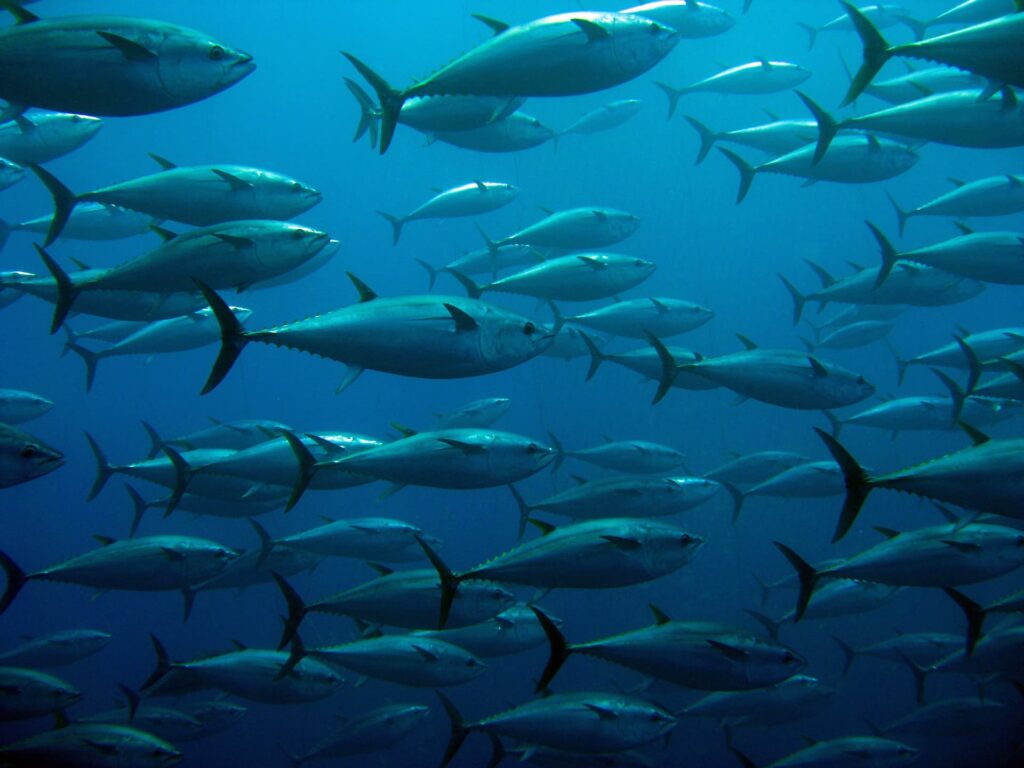
A school of tuna in the open ocean. Adobe Stock.
From a humble mayonnaise-laden sandwich to an expensive piece of sashimi, tuna is a prized source of food for people around the world. Once an inexpensive, easily shipped canned protein source, today’s bluefin tunas can fetch millions of dollars at auction. Millions of tons of tuna are harvested every year, supporting a global industry worth around US$40 billion annually. But tunas are more than just the pink flesh found in cans and sushi, and humanity’s story with these fish goes back further than you might expect. As a biologist and an archaeologist interested in long-term human-environment interactions, we wanted to investigate the deep record of people’s relationship with tunas. We drew on the expertise of 18 leading researchers worldwide and studied a variety of sources, from the skeletal remains of tunas in archaeological sites to ancient rock art, paintings on frescos and vases, written historical records and ethnographic accounts from…
Emma Elliott Smith is a Research Associate in Anthropology at the National Museum of Natural History, Smithsonian Institution, and at the University of New Mexico.
Torben Rick is Curator of North American Archaeology at the Smithsonian Institution.
This article is republished from The Conversation under a Creative Commons license. Read the original article.