Check Before Changing Your Price
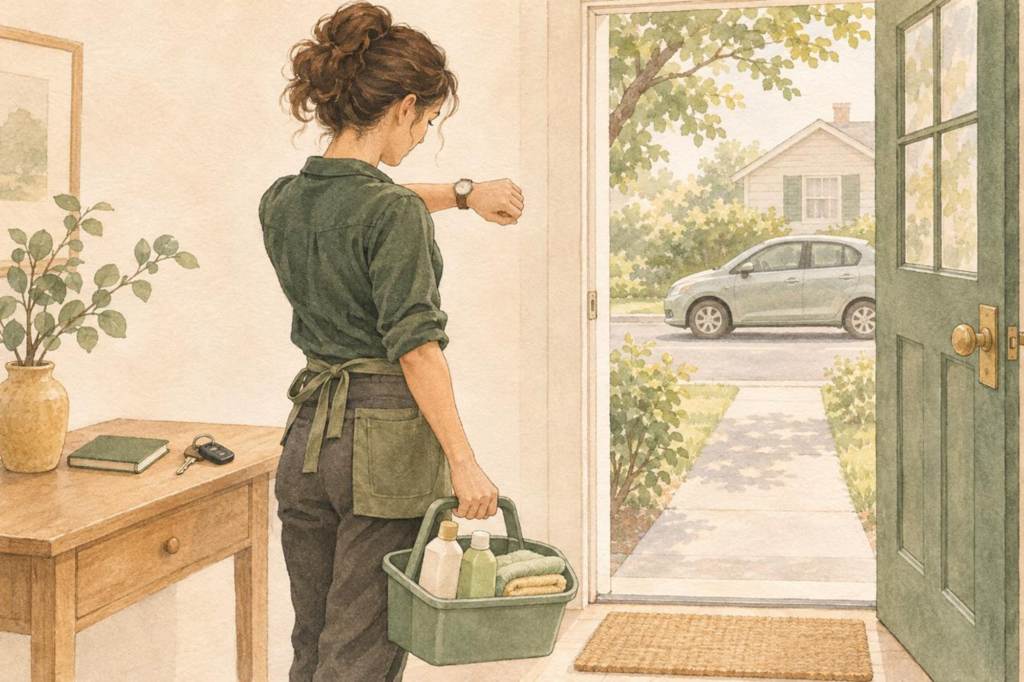
You allowed two and a half hours for a cleaning visit. By the time you have prepared your supplies, driven there, finished the work, and returned home, much more of Saturday has gone than you expected.
It is tempting to decide that the next customer needs to pay more. First, work out what used the time. A longer cleaning task, an extra request, and a drive you forgot to include call for different changes in the next quote.
Home Business Magazine’s guide to starting an office cleaning service introduces hourly and flat-rate pricing. For a beginner taking on residential work, either approach needs a realistic account of what a booking involves. Your first completed visit gives you something to check against your original estimate.
Check What Your Estimate Included
Look at the task list and messages you sent before the visit. What work did the customer agree to? Which tasks were excluded or left for a separate discussion?
Then look at your own planning notes. An allowance for cleaning at the house may leave out preparation, travel, and the messages needed to arrange the booking. Preparation and messages still take time when you handle them at home.
Keep the customer’s agreement separate from your internal estimate. A fixed price for an agreed list of tasks is different from an hourly booking with a spending limit. Use this review to improve the next agreement, rather than adding an unexpected charge to a finished visit.
Rebuild the Booking from Your Notes
Here is a fictional Saturday booking. The times are invented to explain the review, not recommended cleaning speeds.
A solo cleaner agrees to a fixed price for a written list of routine tasks. The cleaner expects to spend 150 minutes at the home, including setup and packing away, and allows another 20 minutes for preparing supplies and handling booking messages. Travel is missing from the plan.
The agreed tasks take 170 minutes. While the cleaner is there, the customer asks for the refrigerator interior, which the written list excludes. They agree on the additional task, charge, and time before it begins. That work takes 20 minutes. The round trip takes 40 minutes, and preparation and administration take the planned 20.
| Part of the booking | Time in the plan | Time recorded |
| Agreed cleaning, including setup and packing | 150 minutes | 170 minutes |
| Refrigerator interior, added by agreement | Not included | 20 minutes |
| Round-trip travel | Omitted | 40 minutes |
| Preparation and booking administration | 20 minutes | 20 minutes |
| Total time accounted for | 170 minutes | 250 minutes |
The booking used four hours and ten minutes altogether. Of that, three hours and ten minutes were spent at the customer’s home.
The difference between the plan and the recorded total is 80 minutes: 20 on the original cleaning, 20 on the additional task, and 40 traveling.
Calling all 80 minutes a cleaning overrun would distort the next estimate. The original cleaning allowance was short by 20 minutes. The other hour came from added work and an omitted activity.
For your own review, use calendar entries, messages, and notes to reconstruct the booking. Mark remembered times as estimates. Leave any unexplained time visible instead of distributing it among tasks just to make the total fit.
Decide What Needs Changing
Start with the agreed cleaning. Did a particular room need more attention than you expected? Did you spend time fetching supplies, or repeat work because you missed something? A useful note might say, “Bathroom took longer; check the shower’s condition before the next quote.”
If you have no detail beyond the total, choose one task to time on the next similar visit. One first clean is not enough to establish how long every home of that size will take. Some initial work may not recur, but check that before removing it from the allowance. This will help you prepare more accurate estimates for your next booking after a weekend cleaning job.
The refrigerator was priced separately, so review its time and charge separately, too. Those 20 minutes alone do not show that the original cleaning price was too low. When another customer asks for extra work, assess both the charge and whether it fits your day before agreeing. Keep these details in mind when planning your next weekend cleaning job
Travel needs its own entry. In the example, the plan left it out entirely. Before accepting another booking, check the round trip or the route to your next customer. When reviewing several jobs together, count each journey once.
With only a few hours available on Saturdays, this can change which bookings you can reasonably take on. A distant job may need a different quote or may not fit the available time. Consider your travel time and schedule before accepting your next weekend cleaning job.
Check the work you do back at home, too. If you are starting a green home cleaning business, include the routine behind the products and supplies you choose. For example, if your service uses washable cloths, preparing a clean set and handling the laundry afterward are part of delivering that service.
Record the minutes you spend on those tasks, without counting an unattended washing cycle as active work. If that time was missing, include it in the next estimate. If your preparation allowance already covers it, count it only once. The adjustment comes from work you identified, rather than a general assumption that green cleaning takes longer. Include these details when reviewing your next weekend cleaning job to make your pricing and time estimates more accurate.
Carry the Review into a Quote and a Calendar
Suppose the notes support allowing 170 minutes for the agreed cleaning on another visit with comparable tasks and conditions. With 40 minutes of travel and 20 minutes of preparation and administration, you would provisionally allow 230 minutes, or three hours and fifty minutes.
That excludes the refrigerator interior. If the next customer also wants that task, assess it separately. Check the actual route and preparation needs, too, rather than copying the previous booking unchanged.
For the same scope of work, the new allowance is 60 minutes longer than the original plan: 20 more for cleaning and 40 for travel. The separately priced refrigerator task does not belong in that increase.
If you have four hours available, that leaves only ten minutes spare. Check whether that is enough room before accepting another task or promising a finish time.
Use the revised time alongside your costs when preparing the price. University of Maine Extension’s service-pricing guidance includes materials, labor, and overhead. If the proposed price would leave less for your time after costs than you intended, reconsider the price or scope before agreeing to the booking. The customer still needs to accept the offer.
Confirm the scope, price, and any limit on the work with the customer. The quote template at Saturday Start provides a place to record included tasks and exclusions.
Reserve the full commitment in your calendar, while giving the customer an estimate of the time you will spend at their home. Keep any buffer for uncertainty separate from your measured cleaning time so you can see what changes as you gain experience.
Keep a Short Record For the Next Booking
Copy these prompts into a private note:
Work agreed with the customer:
Time allowed / time recorded for that work:
Additional tasks and what we agreed:
Travel, preparation, and administration:
What I measured / what I am estimating:
What changes in the next quote:
What changes in my Saturday schedule:
For the fictional cleaner, the immediate scheduling fix is to include the journey. The cleaning estimate still needs checking, and the refrigerator remains a separate task. Before accepting the next visit, read those notes alongside the customer’s request. Use them to explain the next quote and decide how much of Saturday to reserve.
Find a Home-Based Business to Start-Up >>> Hundreds of Business Listings.