Can You Damage A Car By Jump-Starting It?
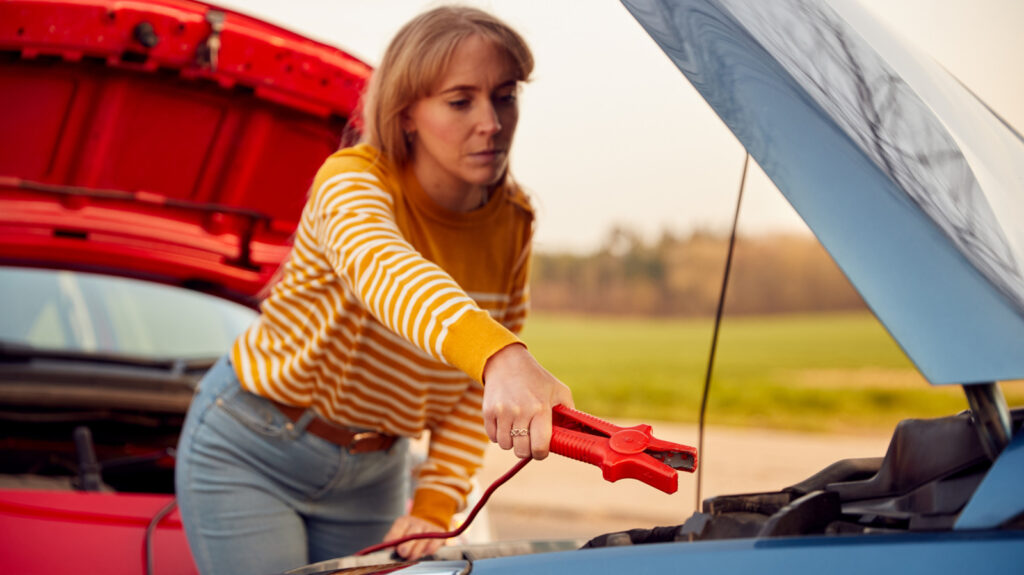
Jump starting a car is a time-honored tradition for many a mechanic working on old cars that were sitting around for a long time, or cars with bad electronics or parasitic drains. Whether you left your lights on or fell asleep with the car parked and the HVAC on, it all leads to the same conclusion — no starter motor, hood up, and some choice expletives. Then it comes time for the jumpstart, which in theory should be safe enough. If it’s so common that most people (should) carry jumper cables, and it is safe for the engine — at least if you do it right.
There are some fairly obvious ways to get it wrong, granted, like hooking up a 24V to a 12V system, accidentally connecting positive to negative and vice versa, and other common pitfalls. But in general, if you just hook up your car battery to a good Samaritan’s to get it running, it won’t harm your car as long as you follow a few fundamental steps, which we’ll go over.
That said, the best way to jump-start a car is by using a purpose-built jump starter pack, like the ones you see mechanics use to get cars sitting for weeks at a time to start up. Otherwise, most of the steps are common sense to anyone familiar with electricity — don’t wear anything metal near the terminals, double-check which is positive and negative, and so on. Electrical spikes can still occur and potentially damage sensitive electronics, but being diligent is the best method for risk avoidance here.
How to safely jump start a car without a jumper pack
Assuming that you don’t have a jumper box ready to go, the best way to jump start a car that died in a parking lot calls for a donor vehicle, and it’s why jumper cables exist. The principle is simple enough — you connect the good battery of one car to your dead battery, completing a circuit that has enough juice to start your car up.
Before you actually jump start the car, there are a few basic safety tips to follow because modern cars have many sensitive electronics. Also, the human body doesn’t particularly enjoy car battery currents. So, let’s bear that in mind and go through the steps.
- First, observe the jumper cables and make sure the clamps aren’t touching or laying in or on a conductive material, like water or metal. Ensure that both ignitions are turned off; we don’t want a running alternator sending power spikes through the system.
- Then connect the positive — the red — clamp to the dead battery’s positive terminal.
- Connect the other positive clamp to the live battery’s terminal. You should now have two red connections.
- Attach the negative — the black — clamp to your dead battery’s terminal. You now have both clamps on your battery.
- Find an unpainted part of the donor car, like a frame rail, and attach the other negative clamp to that. You have now completed the circuit.
After that, you can start both cars up and see if it works. Start up the donor car first, then let it run for a minute or two and start the dead car. Disconnect everything in reverse order. Bear in mind that the donor car’s alternator has to work hard to recharge the dead battery.
Long-term and short-term effects of jump starting
There are multiple steps you need to get right to avoid an electrical spike. That goes doubly-so with modern cars, considering how many electrics run through a single 12-volt bus. Generally, most modern electrics accept anywhere from 12 to 15 volts. So, if you overcharge that by accident, either by running the wrong voltage or by a surge caused from improper handling, it can burn out your ECU, various sensors, the ignition and so on.
Moreover, let’s say you’re constantly jump-starting the car because the battery is bad. Over time, the battery faces sulfation, which basically means that the internal chemistry of the battery changes. It’s a normal phenomenon for lead-acid batteries, but jump-starting them over and over accelerates this process, meaning the battery now has a dramatically shorter lifespan, won’t be able to hold its charge as well, and it’ll even completely fail after a time. That’s why trickle-charging is so important for long-term car storage. If your battery keeps going flat, that’s a mechanical fault that needs fixing.
In short, it’s best to invest in a proper jumper box, especially if you have a modern car, hybrid, or something with a lot of delicate electrics. Moreover, always remember to practice good conduct (pun intended) when working with the terminals, being mindful of metals like rings and watches, and using proper eye protection. Remember, all that electricity doesn’t mess around.