Why Do Some Pickups Have A Hitch On The Truck Bed? (And What’s It Called?)
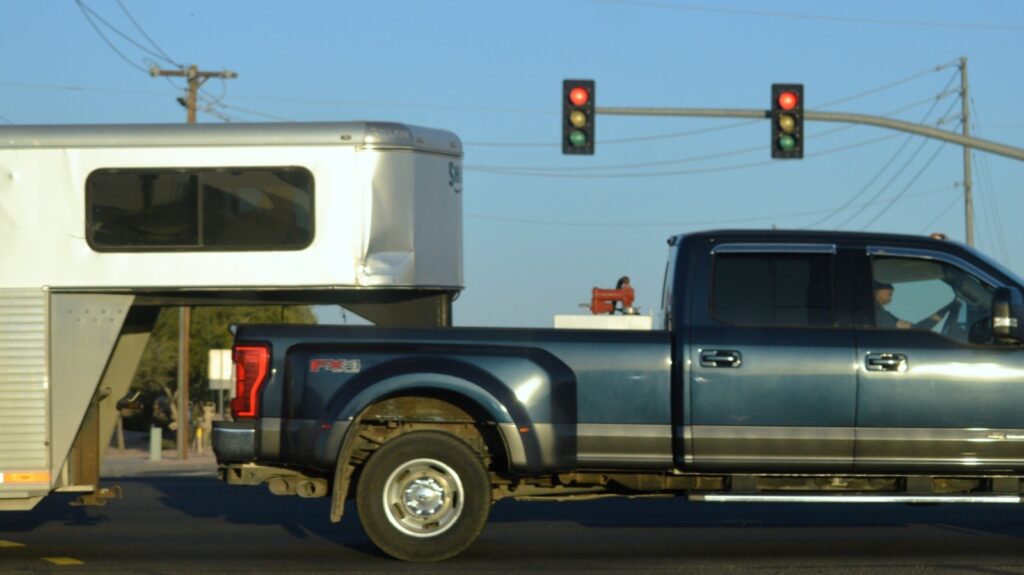
There are two types of hitches commonly found in the beds of pickup trucks: gooseneck and fifth wheel. While there are some differences between gooseneck and fifth wheel trailer hitches, they are both designed to tow heavily loaded trailers used for equipment, livestock, and campers.
Their position in the truck bed (although some trucks use them without a bed) places the weight from the front of the trailer closer to the truck’s rear axle than conventional towing. This allows the truck to carry more of the trailer’s weight and provides more stability while towing by reducing the trailer’s leverage on the truck. The downside is that using a truck bed mounted hitch, especially a fifth wheel hitch, reduces the space available to carry cargo while towing a trailer. While gooseneck and fifth wheel hitches perform similar functions, they are not interchangeable between trailer types.
Fifth wheel trailer hitches are large mechanisms that require considerable space in the truck’s bed and holes drilled through to the truck’s frame for secure mounting. Choosing the correct setup for your truck is critical to its performance as not all fifth wheel hitches will work with every truck and trailer combination. They also require precision driving and relatively flat ground when hitching or unhitching the trailer and towing around obstacles.
Gooseneck hitches differ in that most often the only part of the hitch taking up space in the truck bed is the 2-5/16-inch diameter hitch ball. Some gooseneck hitches allow quick and easy removal and storage of the ball when it’s not needed to restore the truck’s flat bed space.
Pros of truck bed mounted hitches over conventional towing
The alternative to towing with a truck bed mounted hitch is conventional towing. For comparison we’ll use published data from Ford for the F-450 Super Duty Crew Cab powered by the 6.7-liter Power Stroke turbo diesel V8. A 2020 Ford Super Duty can tow up to 24,200 pounds, when properly equipped, using its rear mounted receiver hitch in a conventional towing setup. That figure jumps to 34,600 pounds for the rear-wheel-drive model (32,600 pounds for the 4×4 drivetrain) when using a fifth wheel or gooseneck setup for towing.
For the tactile learners out there, the following experiment my help illustrate the differences in the forces exerted on the towing vehicle when using a bed mounted hitch compared to conventional towing. First, make a fist with your right hand and place it on a table, thumb up and index finger extended. Your thumb represents a bed mounted hitch while your index finger is like a conventional rear mounted towing hitch. Your fist on the table is much like the rear tires on your truck in contact with the ground.
Now using your left hand, press straight down on your extended right thumb, then apply side to side pressure. Compare the stability of your hand when applying the same pressure to your extended right index finger. You should notice that your hand feels more stable — wiggles less — when applying pressure to your thumb than your extended finger.