Voters Want Social Security Solvent: Even if It Means Higher Taxes
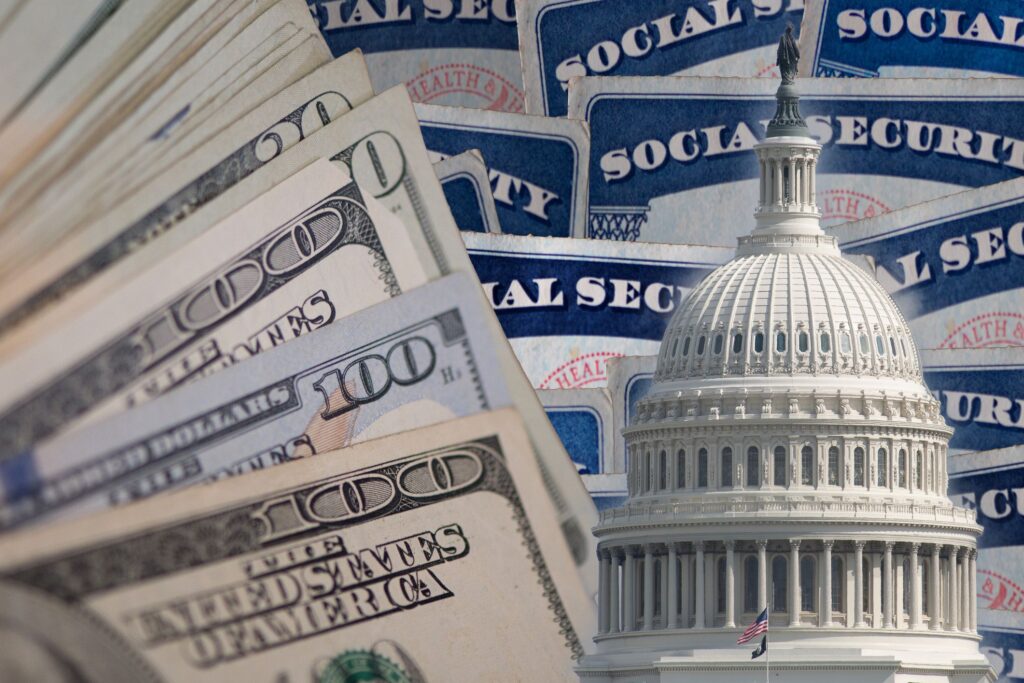
Affordability is a top concern for voters heading into the 2026 midterm elections (November 3), as rising prices squeeze household budgets. But interestingly, Social Security’s future is also emerging as an important election issue for some.
An October AARP survey of likely voters in 43 competitive congressional districts found that 83% of voters age 50 and older see Social Security as very or extremely important when deciding how to vote. A Peterson Foundation survey of voters in five battleground states found that 81% were more likely to support a Senate candidate with a plan to prevent automatic benefit cuts.
Many would also support Social Security fixes that involve higher taxes for some workers.
The concerns come as Social Security’s retirement trust fund is projected to deplete its reserves in just six years, 2032. To avoid an across-the-board reduction in scheduled benefits of about 22%, Congressional lawmakers will have to act before then to help close the program’s funding gap.
Here’s more to know about voter sentiment and what Social Security changes could mean for taxes.
Tax changes that could help shore up Social Security
First, Social Security isn’t “going bankrupt,” and benefits wouldn’t completely cease if the trust fund reserves are depleted. However, without action from Congress, the retirement and survivor trust fund is projected to only have enough ongoing revenue to pay 78% of scheduled benefits after the reserves run out in late 2032, according to the 2026 Trustees Report.
Lawmakers could address the shortfall by increasing revenue, slowing benefit growth, or implementing a combination of changes. However, given deep divides in Congress, it’s unclear when lawmakers will feel the urgency to pass bipartisan legislation.
In the meantime, several proposals are being floated.
Raise or eliminate the Social Security wage cap
One of the most widely discussed proposals would raise or eliminate the cap on earnings subject to Social Security payroll taxes.
Sign up for Kiplinger’s Free Newsletters
Profit and prosper with the best of expert advice on investing, taxes, retirement, personal finance and more – straight to your e-mail.
Profit and prosper with the best of expert advice – straight to your e-mail.
- In 2026, workers pay the 6.2% Social Security tax on the first $184,500 in wages. Employers pay a matching amount, while self-employed workers generally pay the full 12.4%.
- Earnings above the annual cap/Social Security tax limit aren’t subject to Social Security payroll taxes.
Sens. Elizabeth Warren (D-Mass.) and Bernie Moreno (R-Ohio), are calling for eliminating the Social Security payroll tax cap. The proposal would require higher-wage earners to pay Social Security taxes on more of what they earn.
But changing the Social Security tax cap would be more complicated than simply asking high earners to pay more taxes. Key questions Congress would have to address include how to change the cap and whether additional taxes would increase Social Security benefits for high earners.
The Peterson Foundation survey found that 72% of voters supported a proposal to impose an additional 1% payroll tax on earnings above the current 2026 $184,500 wage cap.
The Social Security Administration (SSA) estimates that eliminating the cap could close about 58% of the 75-year funding shortfall if additional taxed earnings don’t count toward future benefits, or about 45% if they do.
Increase the payroll tax rate
Another option is to increase the Social Security payroll tax rate for workers and employers. The combined rate is currently 12.4%, split evenly between employees and employers. Self-employed workers generally pay both shares.
- The SSA has modeled a gradual increase of 0.1 percentage points annually beginning in 2032, bringing the combined rate to 14.4% in 2051.
- That would mean the employee share eventually rises from 6.2% to 7.2%, with employers paying the same increase.
- The change could close about 33% of the long-range funding shortfall.
A broader tax increase would bring in more revenue but would also likely impact workers across income levels — not just those earning above the current wage cap.
Tax investment income
Lawmakers could also look beyond wages for additional Social Security revenue. One SSA-modeled proposal would impose a separate 12.4% tax on net investment income for taxpayers with modified adjusted gross income (MAGI) above $200,000 for single filers or $250,000 for married couples filing jointly.
Such a proposal would:
- Apply to the lesser of net investment income or the amount by which MAGI exceeds the applicable threshold.
- Direct the additional revenue to Social Security, in addition to the existing 3.8% net investment income tax, which generally applies to certain investment income above those income thresholds and helps fund Medicare.
Note: The NIIT is a separate tax established under the Affordable Care Act; it does not fund Social Security.
This approach would shift some of the funding burden to higher-income households with investment income, rather than relying solely on payroll taxes on wages. SSA estimates that the proposal could close about 30% of the program’s long-range funding shortfall.
Change to a fixed-rate cost-of-living adjustment
Under the current Social Security system, the annual cost-of-living adjustment(COLA) is a percentage based on inflation. The same percentage applies to each beneficiary’s monthly benefit, so the dollar increase varies with the benefit amount.
- However, under a flat-rate SS COLA, the inflation-adjusted annual increase would be converted into a dollar amount based on the benefit of someone around the 20th percentile of the benefit distribution.
- Every beneficiary would then receive that same dollar increase.
- That would mean smaller annual increases for most beneficiaries, although people receiving lower benefits could fare better.
An AARP Public Policy Institute analysis found that 80% of beneficiaries would receive a smaller adjustment. For 2026, the average retired worker would have received an estimated $34.20 monthly increase under the proposal, compared with the actual $57.90 COLA.
The difference could compound over time. AARP estimated that a hypothetical retiree who began collecting benefits in 1998 would have received a benefit about 20% lower by 2026 under the flat-rate approach.
An analysis commissioned by the Committee for a Responsible Federal Budget (CRFB) found that giving smaller COLAs to retirees with higher benefits could close about half of Social Security’s long-term funding gap.
The SSA has studied a different approach: cutting annual COLAs by 0.5 or 1 percentage point, which estimates show could close about 24% or 46% of the gap, respectively.
Raising the retirement age
Another option would be to gradually increase the full retirement age (FRA), currently 67 for people born in 1960 or later. Workers could still claim retirement benefits as early as 62, but claiming before full retirement age permanently reduces monthly benefits. Raising the FRA would make those early-claiming reductions larger.
Supporters argue that longer life expectancies make a higher retirement age reasonable and that the change would reduce Social Security costs. But the actual effects wouldn’t be the same for everyone.
- The SSA estimates that gradually raising the full retirement age to 68 could close about 11% of the long-range funding shortfall; raising it to 69 could close about 32%.
- In the Peterson Foundation survey, 52% of voters opposed gradually increasing the retirement age for younger workers.
What about Social Security for younger workers?
Speaking of younger workers…they may seem far removed from retirement, but they’re already paying into Social Security and could face higher taxes or smaller future benefits depending on what Congress decides.
- Under the SSA’s gradual payroll tax increase scenario, for example, the employee tax rate would eventually rise from 6.2% to 7.2%.
- For someone earning $50,000 a year, that would mean paying an additional $500 in Social Security payroll taxes annually once the increase is fully phased in.
Meanwhile, high housing, healthcare, and everyday living costs can make it harder for younger workers to save for retirement. With traditional pensions increasingly rare, many wonder how much they can count on receiving from Social Security when they stop working.
- A December 2025 Cato Institute survey found that only 34% of Americans under age 30 believed Social Security would exist when they retire.
- Nearly eight in 10 (78%) expected to receive less than their full scheduled benefits.
- A separate Nationwide Retirement Institute survey found that 45% of Gen Z and 39% of millennials believed they would never collect Social Security benefits.
And keep in mind, Social Security isn’t just about retirement. The program also provides survivor benefits to eligible children and spouses when a working parent dies, as well as disability benefits to eligible workers who can no longer earn a living.
Social Security solvency: Bottom line
It’s worth noting that even if Social Security reserves are depleted, payroll taxes and other incoming revenue would continue to fund a substantial share of scheduled benefits. So, Congress still has time to change the program’s financing trajectory.
For now? Check your earnings record and estimated benefits through your Social Security account. Younger workers can use the estimates to understand what they may receive under current law, while those nearing retirement should compare benefits at different claiming ages and consider how Social Security fits into their retirement income plan.
But also stay tuned. With the 2026 midterms approaching and the 2028 presidential election on the horizon, pay attention to where your representatives stand on Social Security and what they propose to secure its future.
Related
This article is part of a mini-series on the tax impacts of various proposals to shore up Social Security.
For more on midterm ballot measures, check out our reports: Midterm Election Tax Measures Target High-Income and Property Tax Changes on the Ballot in 7 States.