UK economy grows at fastest pace for more than two years | Economic growth (GDP)
The UK economy grew by 0.7% in the third quarter, its fastest expansion in two and a half years, confirming that consumers and businesses remained resilient despite high oil and gas prices.
The Office for National Statistics reported that the economy “grew robustly” in the July to September quarter, almost entirely due to strong and widespread growth in the services sector.
The quarterly growth rate matched economists’ expectations, and was the fastest recorded since the first three months of 2024, when GDP also rose by 0.7%.
In a boost to the chancellor, John Healey, the ONS also said the economy grew by 0.2% in September, though the ONS revised down the growth rate in August from 0.1% to zero. September’s data beat forecasts of zero growth in the month.
Oil prices have dropped in recent days, but in September rose above $100 a barrel, remaining above that threshold until earlier this month. Natural gas prices were also about three times the level in February prior to the attack on Iran by the US and Israel.
The ONS said wholesale electricity prices were about double the level of a year ago.
“Automotive fuel prices also remained elevated following increases in recent months, reflecting continued pressures in global energy markets,” it added.
Healey said the UK was showing “standout resilience”.
The chancellor added that the economy was growing at the fastest rate in almost 10 years.
The services sector proved to be the most important engine of growth over the third quarter of 2026, rising by 0.9%. There was also a positive contribution from the production sector, which grew by 0.1%. It was a sharp drop in construction that dragged down economic growth, even though it only accounts for about 6% of economic activity.
Suren Thiru, the chief economist at the accountancy body ICAEW, said: said the figures confirmed a “strikingly strong” third quarter as the UK remained resilient to the economic fallout from US-Iran hostilities”.
He said it was becoming clear that investments in artificial intelligence were driving the expansion of services sector activity.
after newsletter promotion
“The third quarter showcased the continued resilience of households and firms. Businesses ramped up investment amid an AI boom, while stronger consumer spending suggests households continued to draw on savings to support consumption despite rising inflation,” he added.
The Office for Budget Responsibility said at the time of the budget in November that it expected the economy to expand by 1.2% this year, which already looks out of date as growth continues to exceed expectations.
Policymakers at the Bank of England voted last week to raise interest rates by a quarter of a percentage point to 4% to cool inflationary pressures in the economy.
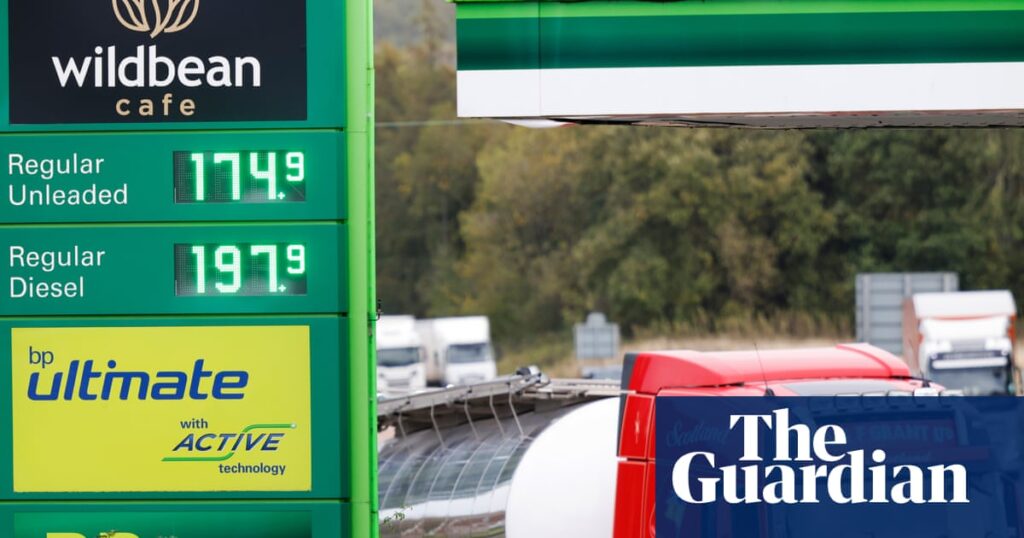
Inflation has risen this year mostly in response to higher motor fuel prices, which in the UK have pushed the cost of petrol above £1.70 a litre and diesel towards an average of £2 a litre.
Analysts said the strength of the economy could persuade the Bank of England to raise rates when policymakers meet again in December.
“These robust figures help keep a December interest rate rise firmly on the table by reinforcing policymakers’ view that the economy remains resilient enough to cope with another rise in borrowing costs,” Thiru said.