This tiny government division charged with AI safety is now reporting to the White House. Experts are concerned
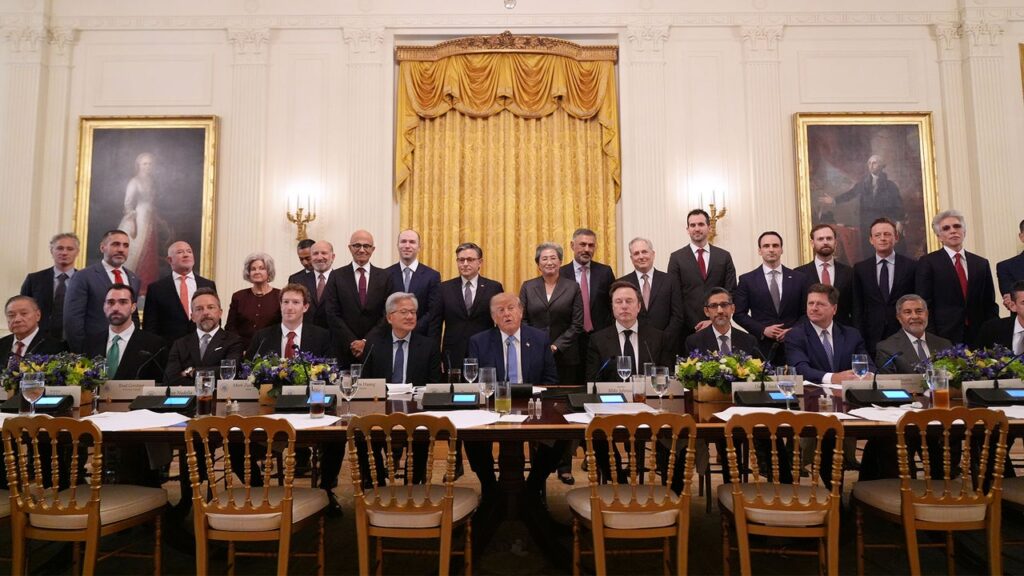
An independent division of the Commerce Department has been asked to informally report to the Trump administration on AI safety.
With public anxiety growing over mounting reports about out-of-control artificial intelligence agents, the tiny U.S. government division charged with assessing the safety of new AI offerings lacks a permanent leader and has stopped publishing its research.
Officials with the Center for Advancing Innovation and Standards for Super Intelligence, or CAISSI, an independent division of the Commerce Department, recently were asked to informally report to an office of the White House. That’s according to two former government officials with knowledge of the ongoing conversations who spoke to The Associated Press on condition of anonymity to avoid repercussions for current staffers.
The new arrangement concerns some critics, who worry that the executive branch might be politicizing decisions that could affect everything from cybersecurity to bioweapons and that the center’s findings could be altered or muted in deference to the tech industry, which has been largely entrusted to police itself.
“These are really powerful institutions that can drastically improve our lives, or the alternative. And the hope is that you can put in nonpartisan or bipartisan technocratic experts to enact policy in a way that best serves the American public,” said Caroline Siegel Singh, an AI and emerging technology program manager for the Federation of American Scientists.
Others argue that bringing AI safety officials closer to the orbit of President Donald Trump, who has taken an outwardly hands-off approach to the issue, could give the division more prominence — and perhaps more funding.
The center, which has experienced departures and until recently was called the U.S. Center for AI Standards and Innovation, is allocated $10 million per year. That’s about one-eighth the annual budget of its counterpart in the United Kingdom, which is far less celebrated for its frontier technologies.
In April, the division’s director was hired and then fired within days. His replacement lasted a few months before he resigned, and the center has been without a permanent leader ever since, although the head of its parent institute doubles as its acting director.
In August, Congress started asking why the center suddenly stopped making public its reports about how safely certain AI systems were performing. San Francisco giant OpenAI also had chimed in by then, asking policymakers to throw more money and support behind the division.
The White House didn’t respond to specific questions about CAISSI. But it said in a statement that Trump had formally established his new Super Intelligence Force — the president’s preferred term for artificial intelligence. Trump has commissioned a report on risks from his Council of Advisors on Science and Technology, and will ensure “continued U.S. leadership on SI for the benefit of the American people,” the White House said.