
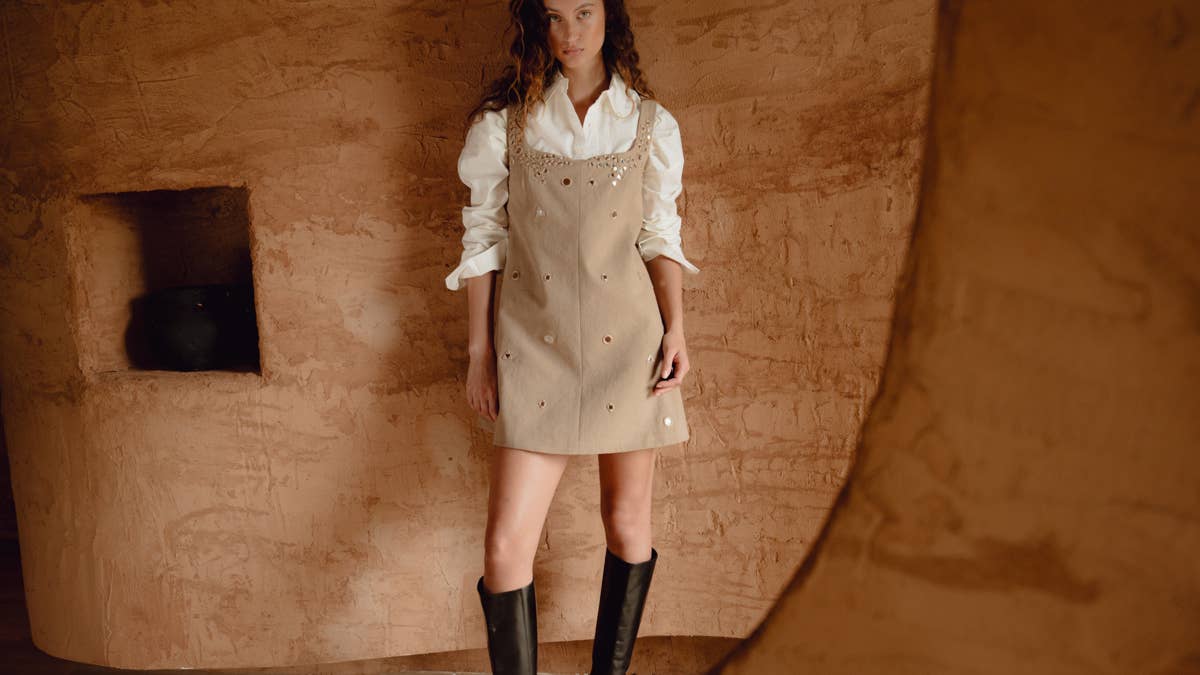
This Indie Designer Will Take the Long Route To Make Fashion She's Proud Of
“I designed my first dress when I was 13 years old,” Tamanna Mullen, founder of Arth Atelier, tells Fashionista. But despite this early interest in fashion, Mullen pursued a business degree after leaving Punjab, India for the U.S. 16 years ago.
“The easiest way I can explain that is my upbringing as a South Asian person,” she says, of feeling pressure to study a perceivably serious and respectable subject. Still, the initial vision she had for her career — running her own fashion brand — remained clear. Fashion was part of her upbringing, too, as she came from a culture and family rich in textile knowledge. “Punjab is the hub of textiles and agriculture, and my family were tier-four vendors,” she says. “I’ve always grown up around garments and textiles, and always had a natural curiosity of it.”
Mullen paired her curiosity and business degree and entered the world of corporate fashion, working across streetwear, sportswear and ready-to-wear for brands such as Savage x Fenty, New Balance and Victoria’s Secret. Based in Boston, she led end-to-end strategy of multiple New Balance collections, overseeing production strategy, garment construction and fabric sourcing for six years before taking the leap to start her own
traceability-rooted label.
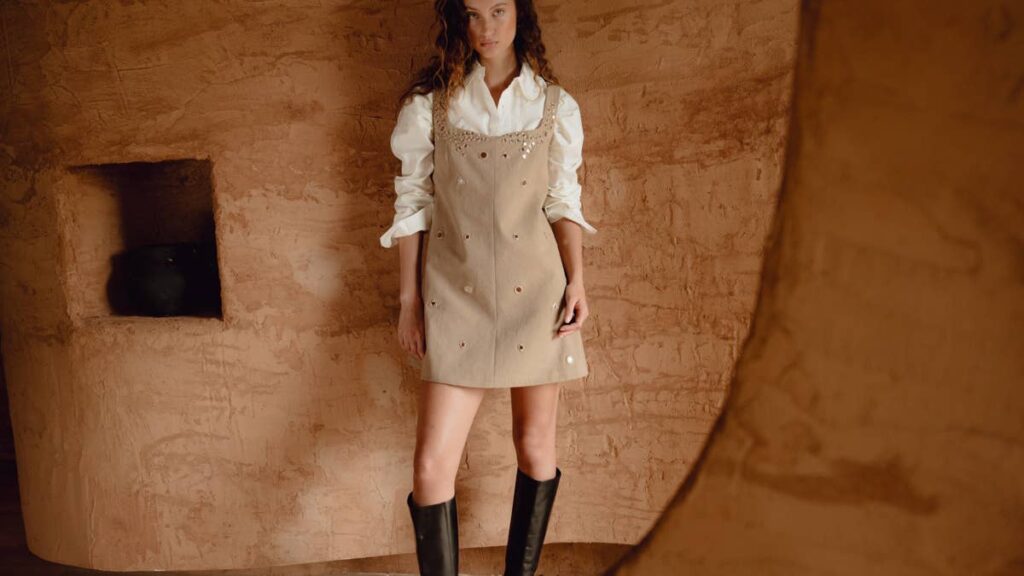
Photo: Courtesy of Arth Atelier
Her decision to leave mass production for a slow, more intentional approach to fashion inspired her brand’s name: “Arth means ‘significance’ or ‘purpose’ in Sanskrit, and atelier, of course, is ‘creative space,'” Mullen explains. “It’s a reminder to myself to stick to the core of the brand, which is producing ethical, meaningful and timeless pieces.” She’s still based in Boston while operating an atelier in New Delhi, India.
Before launching Arth Atelier in 2024, she spent two years conceptualizing, sourcing and building proper relationships with traceable artisans and partners. “I spoke to anyone I could: sheep herders, farmers, an anthropologist researching an organic farming cluster in India,” she says. “I found an incredible partner in Italy working with about 200 regenerative farms, including Piedra Mora Farm in Uruguay where we sourced [wool for] our cardigans. I tried to find the right partners for the ecosystem I wanted to build.”
This incubation period allowed her to carve out the brand’s foundational pillars of craft and impact — defining the initial design codes and the reality of traceable production for an independent, emerging designer.
In short, traceability comes down to documentation called transaction certificates that can prove where the fiber of a garment comes from, and each stage of the process from being produced into a textile, cut and sewn and then embroidered. “All our pieces come with a hang tag that has a QR code showing the entire journey,” Mullen notes.
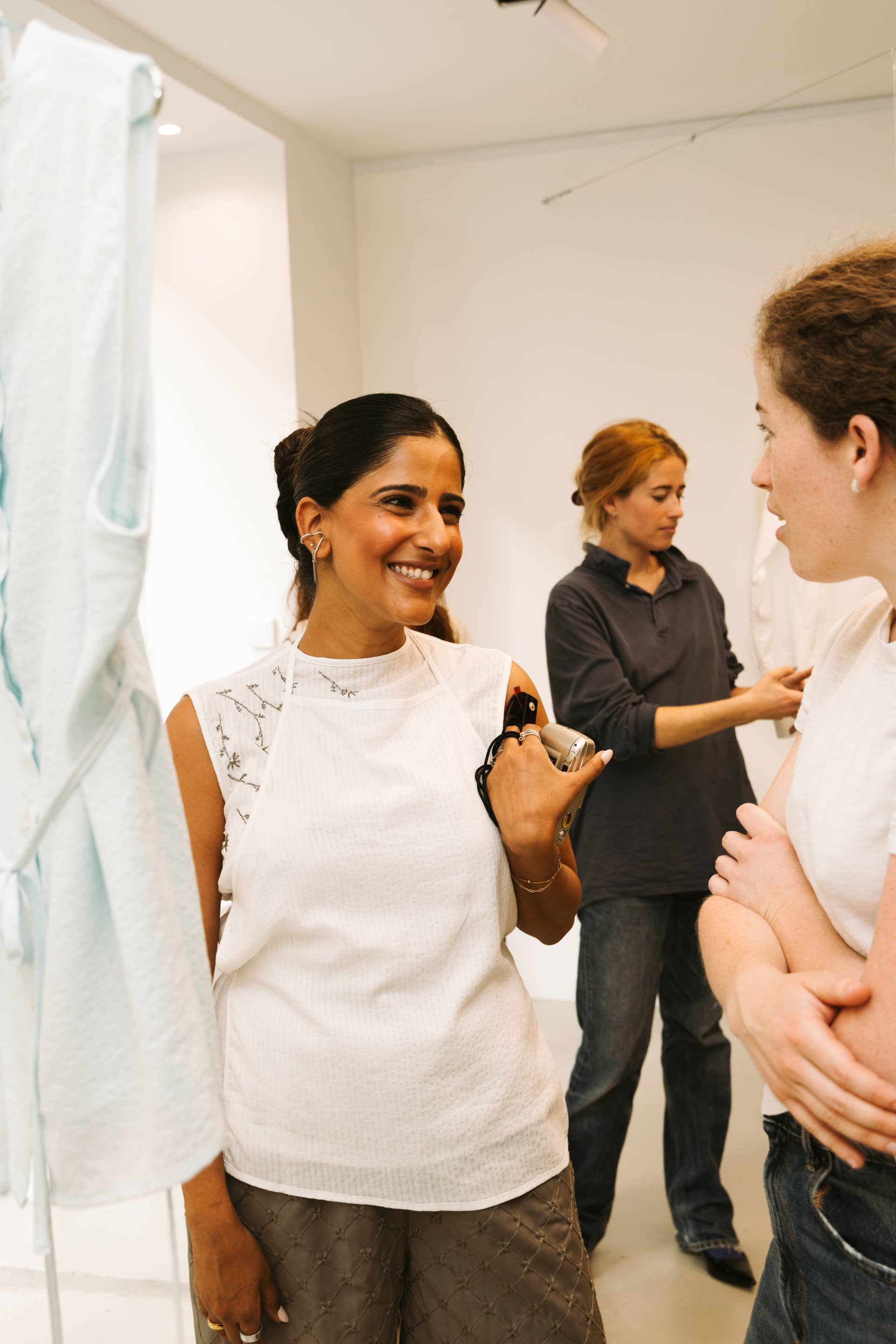
Photo: Courtesy of Arth Atelier
She outlines the codes’ importance in two parts: For one, it acknowledges the skilled hands that contributed to the garment from start to finish. “A lot of the couture houses around the world have gotten their pieces embroidered in India, but that’s not often talked about,” Mullen says. “They have labels that say ‘Made in Italy’ or ‘Made in France’ because, by the FTC rules, you get the label wherever your last substantial transformation takes place. To me, that’s a very one-sided and industrial view of production.” Secondly, they hopefully prompt consumers to have a deeper respect for garment making. “I want to educate people on how many layers go into making one incredible blazer.”
Mullen clarifies that she will never claim 100% traceability, as it’s quite difficult to achieve due to supply-chain middlemen. “We operate in such an opaque ecosystem, unfortunately, but for me it means working with suppliers with very transparent operations,” she says. She also opts to use the word “intentional” over broad, catch-all terms like “sustainable.”
To circumvent those gray areas, she makes custom fabrics so that she can be specific about the materials used and how they are sourced. Thus, the pool of eligible fabric suppliers is quite small — it’s a more expensive route, but easier for traceability as it narrows the supply chain. “I only have one wool supplier that I work with,” Mullen says. “We source from mostly European locations, and have been experimenting to source more locally in India, like for example our banana fiber, an alternative to silk.”
A look through the brand’s website will reveal how deliberate she is about the regenerative fibers she does use, and the fabrics she absolutely does not. “We only use 100% certified organic wool that is mulesing free,” she points out.
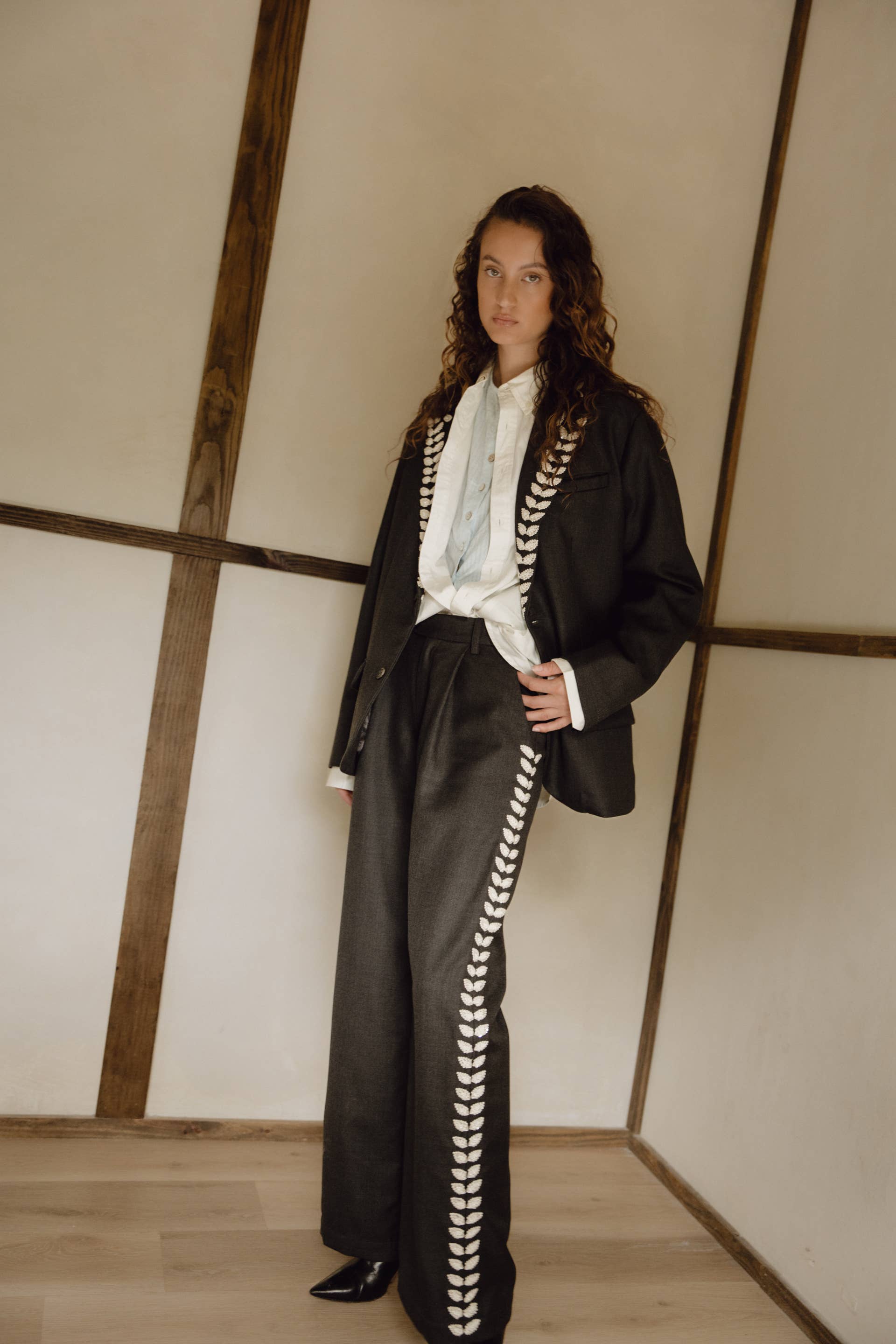
Photo: Courtesy of Arth Atelier
This discernment around fabric and suppliers often means committing to higher minimum order quantities or more premium pricing than, say, deadstock or regularly-produced fabric. This lengthy and expensive sourcing process necessitates an extra layer of creativity and craftsmanship when planning how the fabrics can be used across collections.
“Versatility is really critical for me,” Mullen says. She tries to find various uses for fabric, as well as create multiple-use pieces. She also says much of her training led her to look at clothing in a “gender-agnostic way”, and utilizes that foundation to bring contrast to her design — “even something as small as using menswear buttoning across all of my pieces.” The result is sharply-tailored outfitting suitable across gender identities, made of dynamic material with embroidered designs rich in detail. Pieces range from $150 to $700+ depending on the detail and handwork.
To achieve these delicate designs, Mullen works with “kaarigars” or highly-skilled Indian artisans. She explains how most traditional embroidery and handwork is a multi-generational (seventh- or eighth-generation, to be exact) and regional practice. “A print piece in our last collection was done in Bagru, a small town right outside of Rajasthan, India, where the whole community is known for that type of print work,” she says. “Depending on the type of embroidery, we’ll commission a small group of kaarigars to come to the [local] atelier in New Delhi. With the Chikankari shirt, we sent the pieces to Lucknow to get embroidered by women kaarigars who all operate out of their homes.”
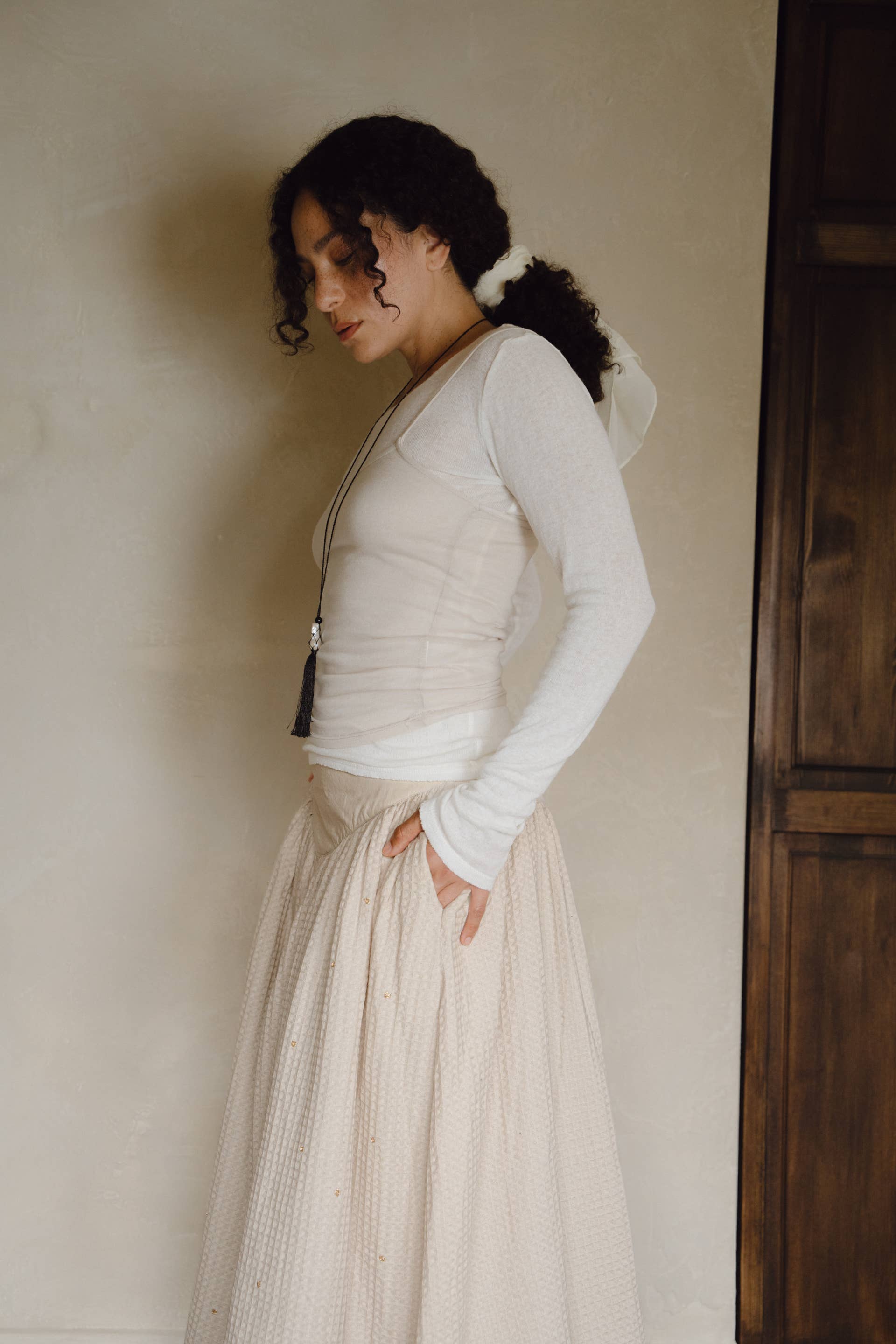
Photo: Courtesy of Arth Atelier
Having a deep understanding of these practices and developing relationships with their stewards is essential to Mullen and her brand’s ethos. As Indian style becomes more contemporary, this is also her way of keeping kaarigars’ practices alive. She’s also making an effort to challenge the typical design aesthetic associated with sustainable brands. “We’re contemporary in our silhouettes, while using traditional Indian embroidery as an experimental medium,” she says. “We’re trying to target the global-minded consumer who cares about the consequences of consumption.”
The label’s most recent collection, “Anchored in Motion,” was created for those with fluid identity, shaped by experiences collected across continents and cultures; this nods to a broader ethos that is instrumental to the brand itself.
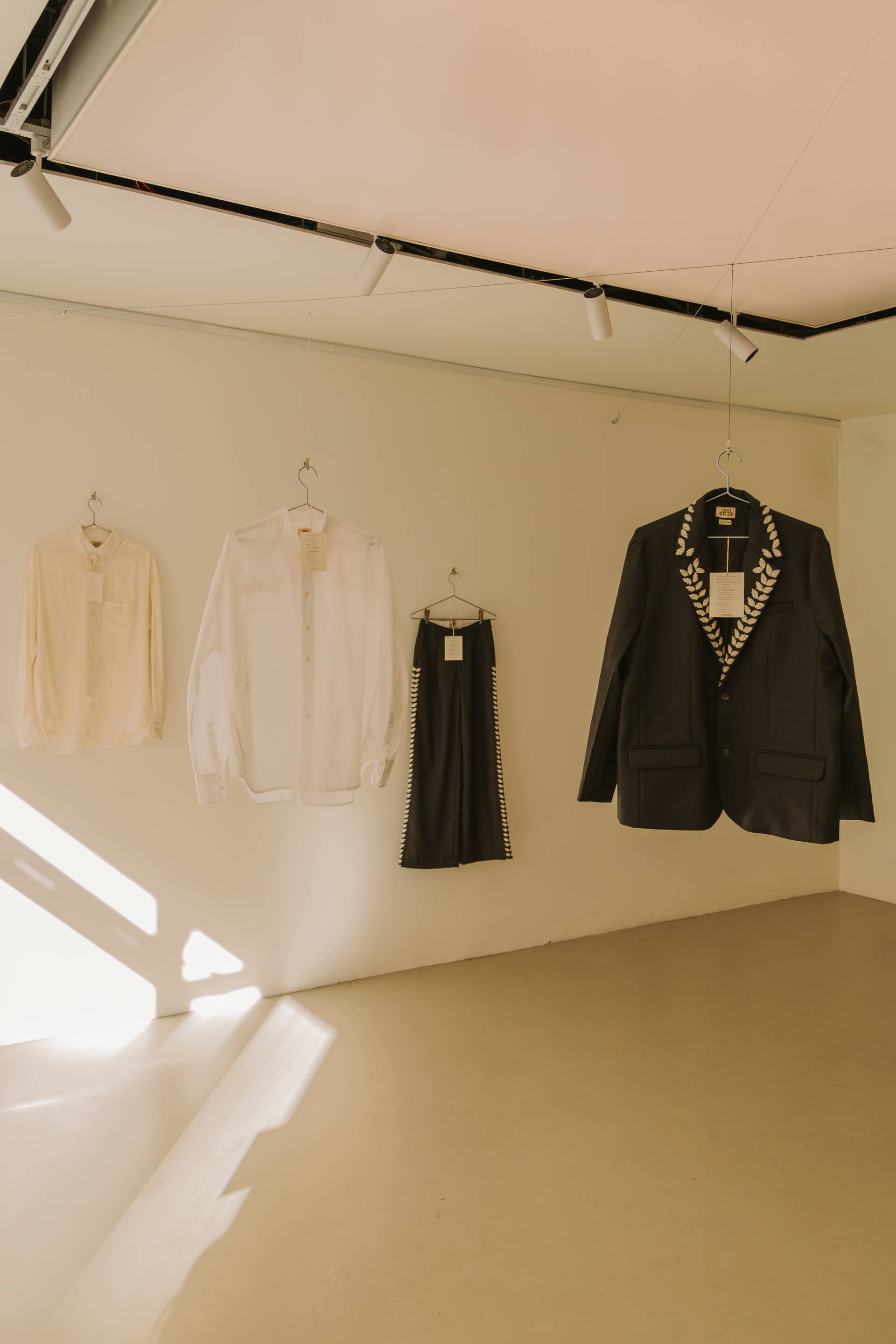
Photo: Courtesy of Arth Atelier
Arth Atelier debuted its second collection with a showcase following Paris Fashion Week earlier this year, and Mullen aims to continuously present her designs in thoughtful, innovative ways. In general, the brand is prioritizing ethical expansion over rapid growth. It operates primarily on a direct-to-consumer model, while selling with select, aligned wholesale partners such as Garmentory and Monty.
Ultimately, as Arth Atelier grows, Mullen just wants to create work she can always feel proud of.
Please note: Occasionally, we use affiliate links on our site. This in no way affects our editorial decision-making.