The Subaru WRX Trim I’d Pick (And Why You Probably Should Too)
There’s a complaint that continues to echo through the automotive enthusiast community, and it goes something like this: “They don’t make good, inexpensive, manual-transmission cars anymore.” Cars are getting more expensive every day. That’s true. And finding anything fun with a manual transmission is getting increasingly difficult.
The wealthy have all sorts of choices for entertaining and engaging cars, but everyone else, it seems, is being left with egg-shaped SUVs that offer little entertainment. And while those complaining aren’t incorrect about the availability of inexpensive and enjoyable transportation, I’d offer up the Subaru WRX as one of a few exceptions to the capitalist K-shaped-economy trends that are currently ailing the enthusiast market.
 Travis Langness/SlashGear
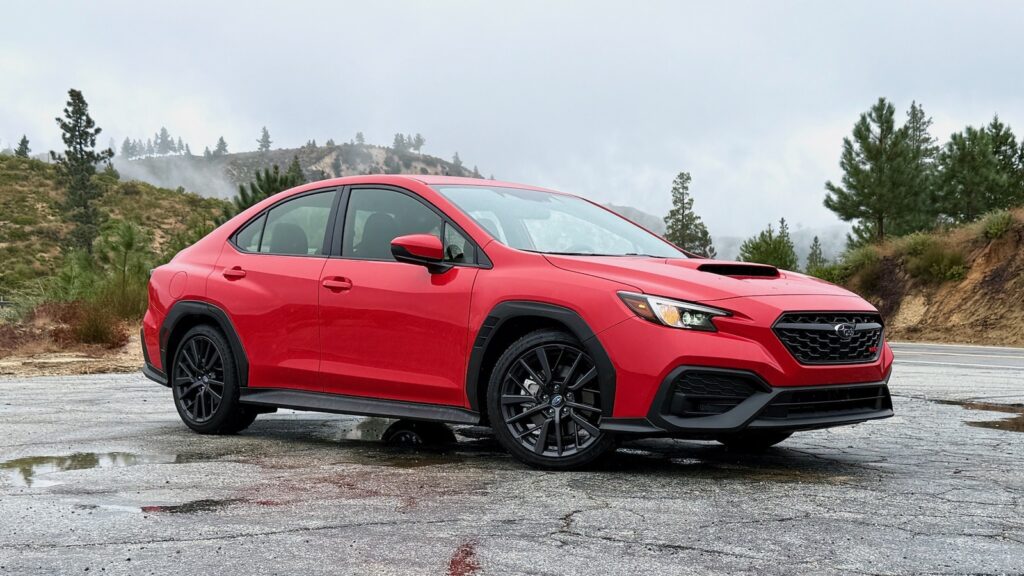
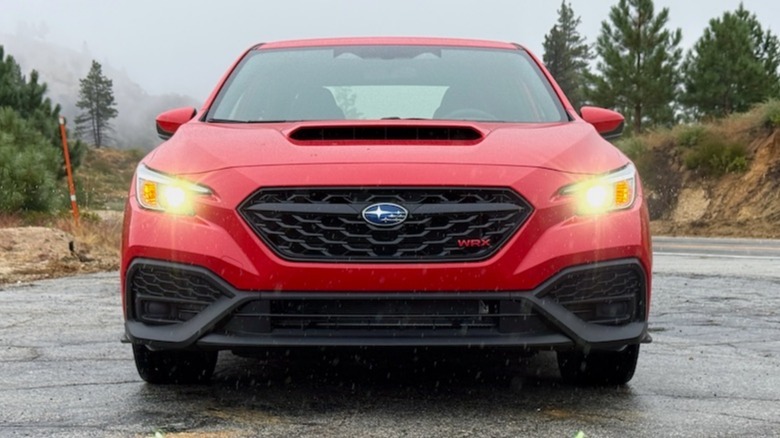
This is certainly the case with the back-for-2026 base model of the WRX that I just spent a week in. Eliminated from the lineup in 2025, the no-frills version of the WRX is back. Not only has Subaru re-introduced a basic, entry-level version of their sporty four-door compact, but it’s less expensive than it was two years ago. High-priced trends, consider yourselves bucked.
Bringing the price down
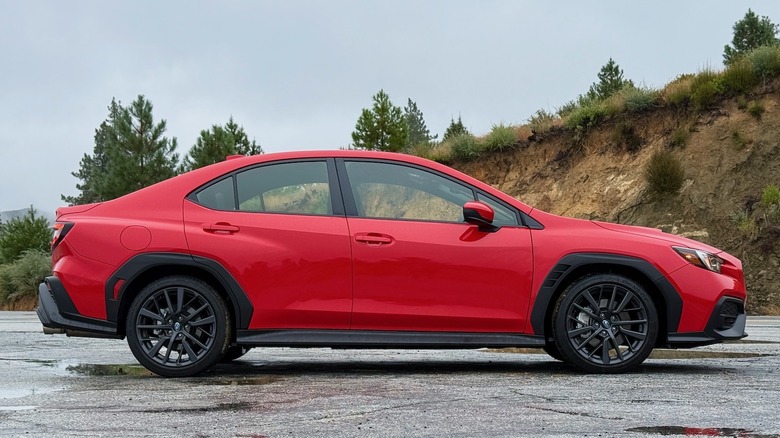
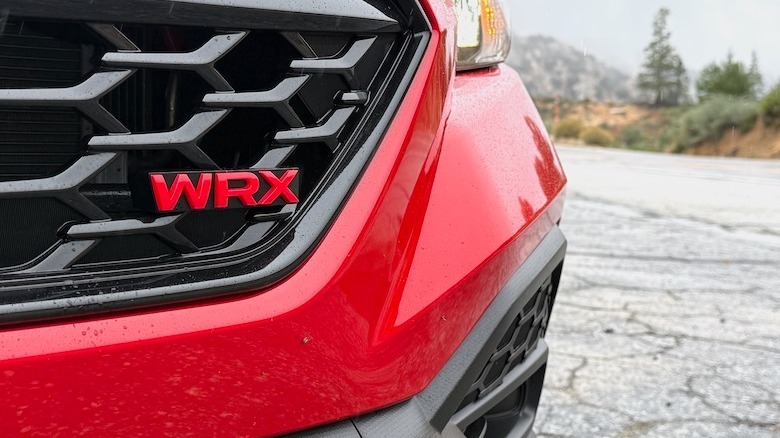
Before we get into how the latest WRX drives, let’s talk about that lowered price. In 2024, the last time a base WRX was available in the lineup, the entry-level cost was $33,855 (including a $1,120 destination fee). In 2025, the lowest MSRP you could pay for a WRX was $36,920 – that was the Premium model with a bit more equipment, but it was still a sizable jump. Now, the base 2026 model has an MSRP of $33,690. And with a sub-$34,000 price tag, the 2026 WRX still offers a decent amount of equipment.
A large center touchscreen, dual-zone automatic climate control, leather-wrapped bits like the steering wheel and shift knob, and a number of driver aids via Subaru’s EyeSight Assist Technology all come standard. Adaptive cruise control, lane-departure warning, and pre-collision braking are all part of the package. That’s before we’ve even taken a look under the hood.
 Travis Langness/SlashGear
The WRX does have better-equipped trim levels, going all the way up to $47,340 for the limited-edition Series.Yellow, but even that top version of the Subaru is less expensive than cars like the Civic Type R, which only comes in one trim, and it costs $49,990.
Healthy power for a healthy price
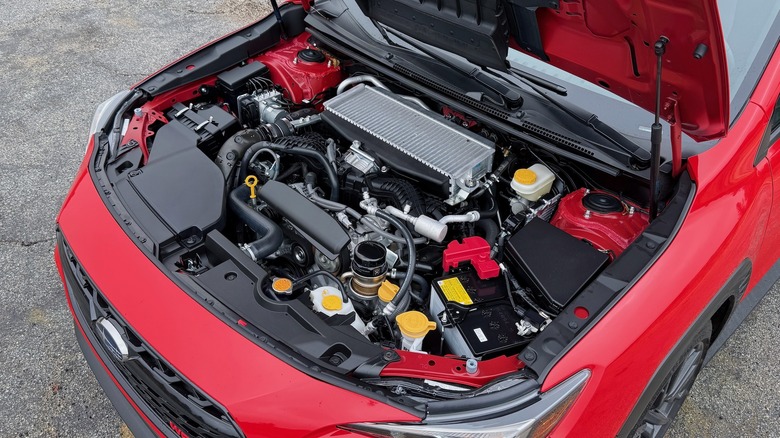
As has been the case with the WRX for years, there’s only one engine option: a turbocharged 2.4-liter boxer flat-four. There’s no hopped-up STI model to speak of these days, so that’s all you get, but the basic WRX powertrain is still stout. The turbo-four is paired with all-wheel drive, and on base models it comes hooked up to a six-speed manual transmission.
The boxer unit puts out 271 horsepower and 258 pound-feet of torque. According to Subaru, the WRX’s power peaks at 5,600 rpm, and in the real world that translates to a bit of loping down low in the RPM range. Rev the WRX up a bit, though, or get it out on the open road where you can maintain higher RPMs and it’s a lively little sedan. The 12.0 psi of boost from the twin-scroll turbocharger builds predictably, and it becomes playful the closer you get to the top of the RPM range.
 Travis Langness/SlashGear
Those numbers can’t match cars like the Civic Type R or the GR Corolla, but that’s not what the WRX is aiming to do, especially when it costs considerably less than those rivals. The Honda is closer to $50,000, and the Toyota has an entry-level price over $42,000, with the top GRMN model going for over $65,000. With 276 horsepower, the Hyundai Elantra N is a better performance match for the WRX, but even the Hyundai has a base price of $36,595. For $34,000, the WRX is tough to beat.
Putting the power to work
After re-familiarizing myself with the Subaru’s powerband for a few days (it had been a while since I’d driven one), both in the city and on the highway, I took it to the mountains. It was uncharacteristically wet out for a SoCal Sunday, and when it rains in Los Angeles, people tend to stay inside, so I had the roads mostly to myself. That was a joy in the little Subaru.
All-wheel drive and sticky tires kept things from getting too squirrelly in the wet, but I could introduce a bit of sideways travel without much fuss. Steering in the WRX was well weighted: light enough for a little flick here and there, but heavy enough that it felt stable. Making my way around corners was a predictable exercise, even in the wet. The steering wheel itself is small enough that it can move easily in my hands, and it returns to center pretty quickly.
 Travis Langness/SlashGear
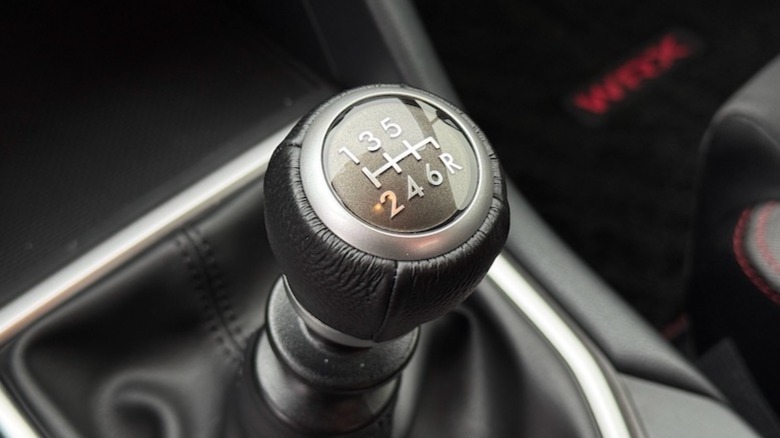
Where I did find a bit of fault with the fun factor was in the responsiveness of the clutch pedal and gear lever. Both felt relatively numb – the clutch pedal didn’t have a very distinctive catch point, and the gear lever didn’t offer much positive engagement, though the shifts were still pretty smooth. Neither was a deal-breaking drawback, though.
A basic cabin and a basic ride
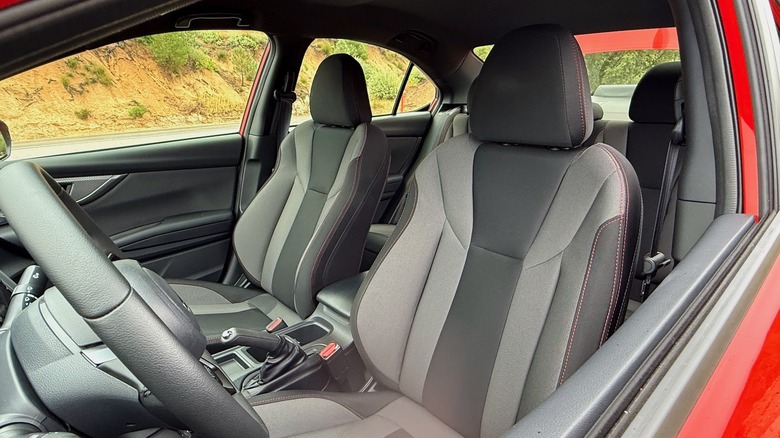
If you’ve sat inside the WRX in the last few years, you won’t be surprised much by the interior of the latest model. Many of the same materials Subaru has been using for years show up in the cabin, with some hard plastics in high-traffic places like the climate vents, but for the most part, things felt quality enough to match the price tag. The contrast stitching on the cloth seats, the small bits of fake carbon-fiber wrap in the cabin, and a few bits of leather in certain locations do their best to class up the joint.
 Travis Langness/SlashGear
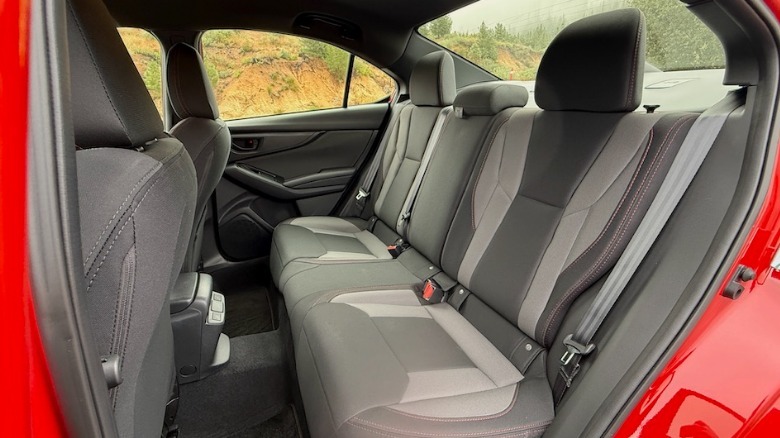
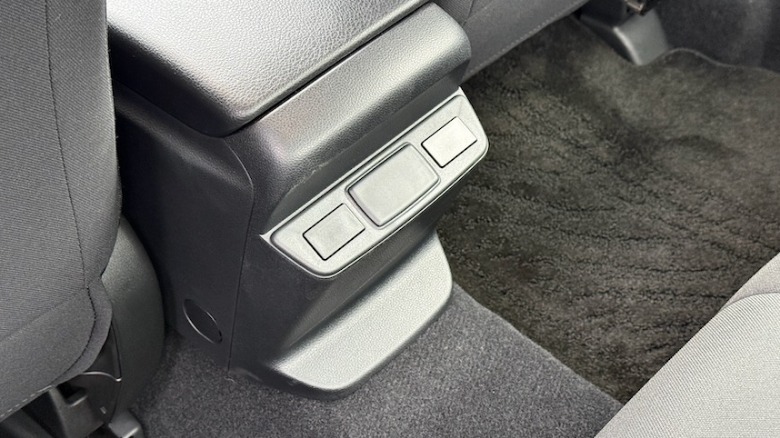
The seats themselves are pretty simple, with mild bolsters that’ll hold you in place if you’re a bit enthusiastic. The back seat is an even simpler place, with flat seat bottoms and flat seat backs. There’s enough room for adult passengers in the rear, but I wouldn’t want to be stuck back there on a long road trip. On the base model especially, there’s a lack of creature comforts back there — made painfully obvious by the plastic squares placed over the spot in the center console where the USB charging ports should be.
 Travis Langness/SlashGear
Trims like the mid-level WRX GT get electronically adjustable suspension. The base WRX, however, gets a simpler sport-tuned suspension setup that felt firm over bumpy roads, but it kept the car planted through corners. Basically, the ride was on the stiff side, but the trade-off was that it provided good handling. It’s a compromise that I’d be willing to make, though, to save several thousand dollars upfront.
Tech that keeps things modern
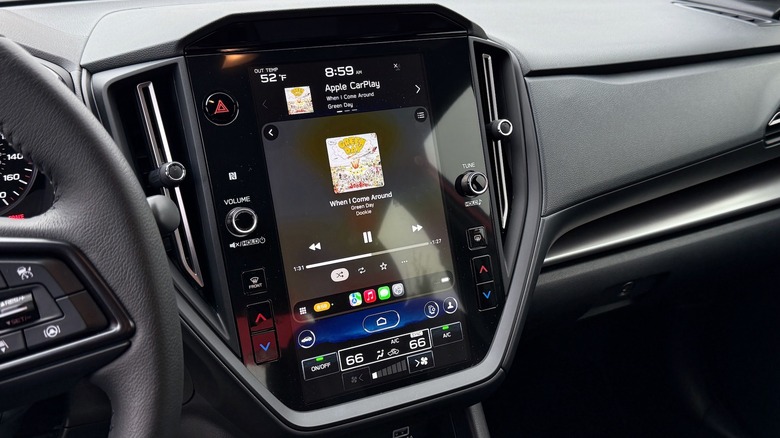
In contrast to the older and less-impressive bits of the WRX’s interior, there’s a big, modern screen that’s the centerpiece of the dashboard. The 11.6-inch center screen is high resolution, with impressive graphics and quick responses to touch inputs. It’s also vertically oriented, which means it can be mounted low enough on the dashboard to keep forward visibility unobstructed. Apple CarPlay and Android Auto are standard, and the former worked flawlessly during my test.
For the driver, there are real, honest-to-goodness gauges. Upper trim levels of the WRX get a digital gauge cluster, so for drivers who want an analog feel, the base model has the appeal.
 Travis Langness/SlashGear
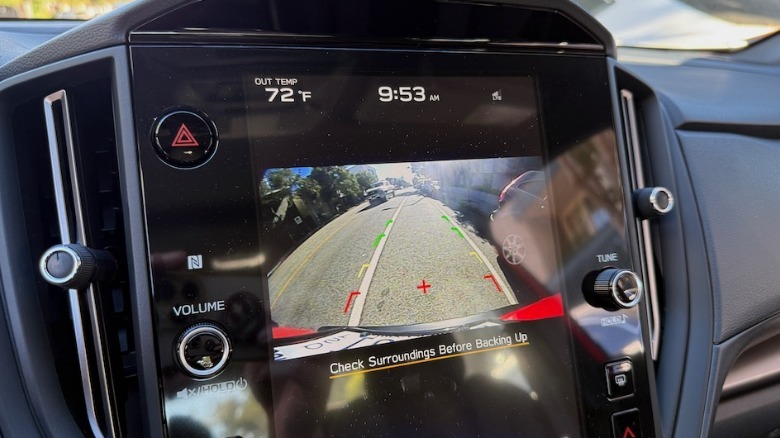
The screen is a highlight of the WRX’s tech experience. It’s paired with a few lowlights worth mentioning, though. The driver aids like Subaru’s attention monitor and lane-keep assist were extremely overbearing. The attention monitor was constantly beeping, even during the first few minutes of my daily drives when both my eyes were squarely on the road. The standard stereo was underwhelming, both in terms of volume and sound quality. And the rearview camera was pretty low resolution, which was easy to spot when you compared it with everything else on such a high-res screen.
2026 Subaru WRX verdict
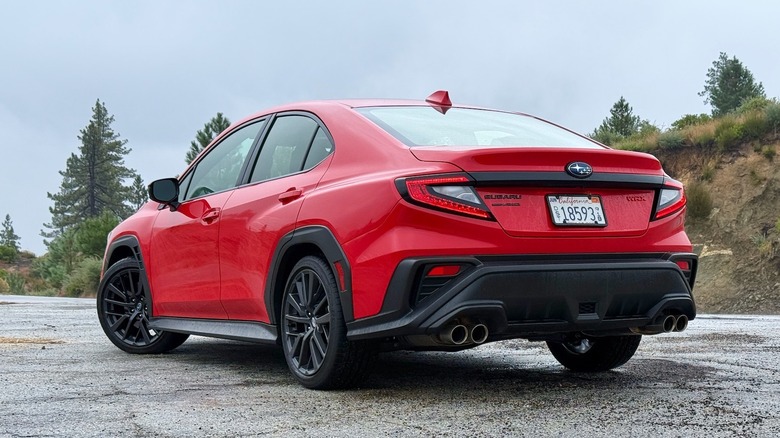
More than once while driving the WRX, I started to daydream about the modifications I’d do to a base model if I owned one. I’d likely opt for a new stereo; at the very least, I’d add an amplifier and a subwoofer to what’s currently in there. I’d probably go with some unique wheels with stickier tires (maybe keeping the original set around for winter driving). Maybe I’d do some research into suspension setups that could give me a bit lower ride height and some adjustability for suspension settings.
Does this defeat the purpose of buying the entry-level version of a car like the WRX? Maybe, but I don’t think so. I think it puts the WRX and its performance within reach of more buyers and enthusiasts.
 Travis Langness/SlashGear
One of the things that’s created so much joy for me over the years as a car enthusiast is customizing my cars — making them my own and improving them, piece by piece during my time with them. I think that’s the sort of opportunity the base model 2026 Subaru WRX provides. Sure, you can spring for the Premium trim with its heated front seats, or the Limited model with its upgraded stereo, or even the GT or tS models with their upgraded suspension and big Brembo brakes, all if you’ve got the money. But the power, the six-speed manual, and a joyful driving experience can all be had for a reasonable price, and those are the best parts.