Inside the 42-Year Journey to Bring ‘Neuromancer’ to the Screen
Briana Middleton has something to show me. “Wait!” she says just as we’re about to end our Zoom call, reaching for something just beyond her screen.
“When I found out we were going to be doing this,” she says, “I was at the thrift shop in my neighborhood and I found this.” Then she points it at the camera: an issue of WIRED from 1995 featuring Keanu Reeves on the cover alongside the line “William Gibson on the making of Johnny Mnemonic.”
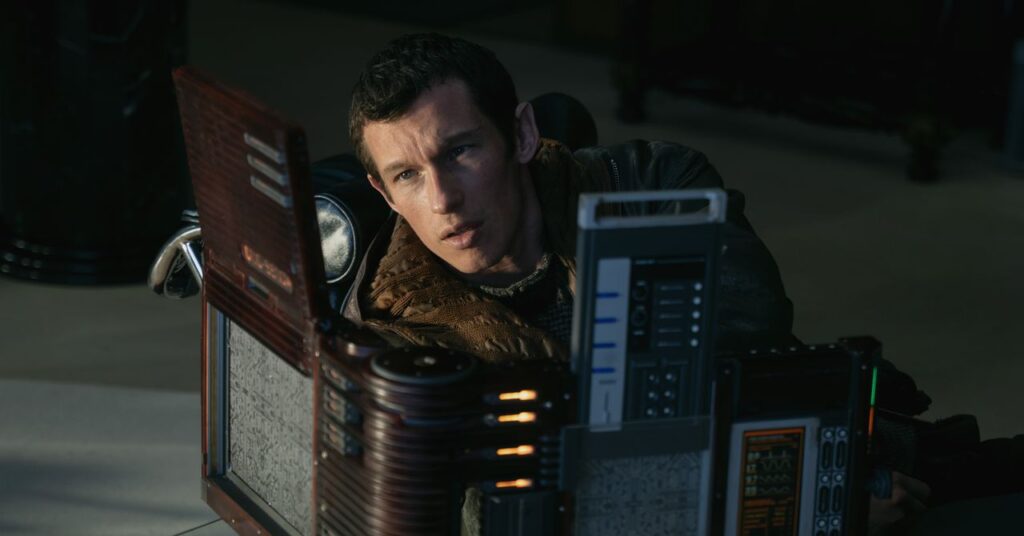
Very apropos. The 1995 film Johnny Mnemonic was based on a short story by Gibson, who also wrote the screenplay. Molly, the “razorgirl” Middleton plays in Apple TV’s forthcoming Neuromancer adaptation, made her first appearance in that short story. Her relationship with the protagonist Case, played in the series by Callum Turner, mirrors the one Reeves’ Neo had with Trinity in The Matrix, which is steeped in Gibsoneque lore.
For Middleton, to be giving an interview to WIRED about Neuromancer’s epic journey to the screen not long after finding a 1995 issue of the magazine in a secondhand store is so uncanny it almost feels like a glitch. “Dude, it was eight bucks,” she says, agreeing that eight dollars is a steal for a vintage WIRED. “I was like, ‘This is crazy.’”
Maybe all things happen exactly when they’re supposed to. Gibson originally released Neuromancer in 1984, back before hackers were cool. Back before hackers were CEOs. It focused on Case, a young computer jockey who can get online through a jack in his head. He teams up with Molly and a former military man named Armitage to break into the offworld home of the Tessier-Ashpool family, who became astoundingly rich thanks to the tech company they founded.
The book’s novel ideas—cyberspace, brain-computer interfaces, all-powerful AIs—were years away from being mainstream, let alone possible. In the years since, there’s been much talk of turning Neuromancer into a movie or TV show, but it never took off, even as Hollywood mined sci-fi for hits.
On January 22, all of that will change when Apple TV releases its long-anticipated adaptation. Ahead of its release, WIRED got in touch with Middleton, Turner, and showrunners Graham Roland and JD Dillard to find out how they became the first to bring the book to screens—and the burden of taking on one of sci-fi’s classics.
On adapting an iconic sci-fi novel: