Data centers score worse than Republicans in Election Day rout
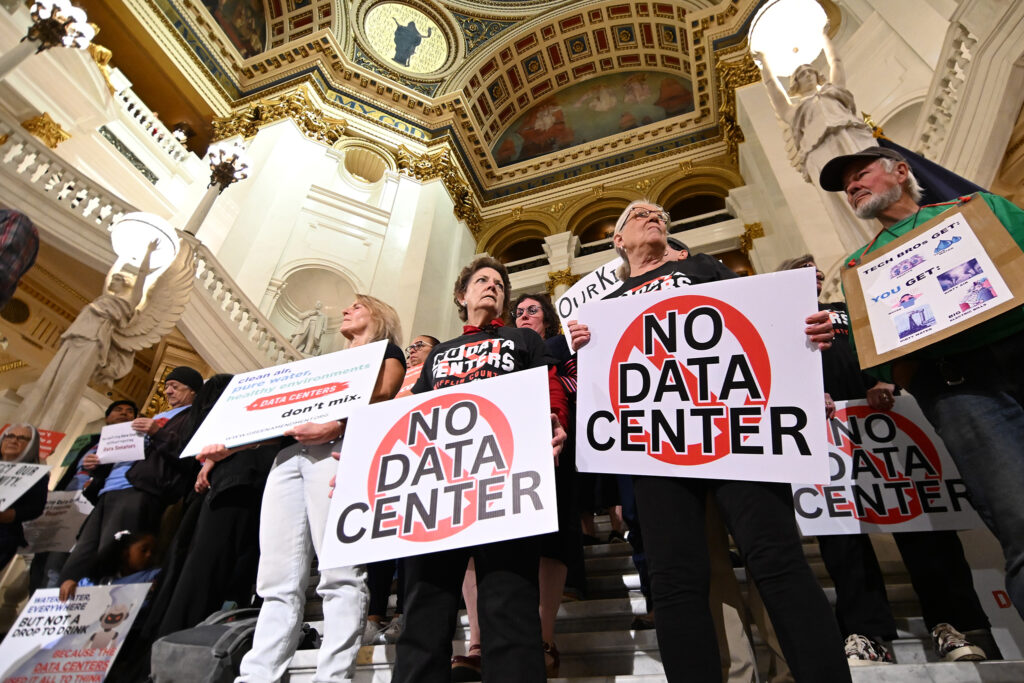
Republicans weren’t the only ones swept up in Tuesday’s historic blue wave. Across the country, voters made it clear they don’t want data centers, either.
Out of 41 ballot measures nationwide with a question on data centers, Big Tech only scored one win in a Midwestern town with approximately 800 residents.
The measures ranged from outright bans and moratoriums to new zoning laws that regulated data centers, along with limitations on size and new rules requiring future voters to decide if data centers can be built. The only win for Big Tech came from the tiny city of Harwood, North Dakota, whose residents rejected a new law that would have required an independent review for data center proposals.
Ten of the ballot measures were only advisory votes –– essentially a temperature check on how residents feel about an issue without changing any laws. As of Wednesday, the anti-data center side was heavily favored with more than 70% of the vote in each election.
While tech leaders have been quiet so far on Tuesday’s results, Elon Musk conceded in an X post on Tuesday that data centers took a hit. Musk donated nearly half a billion dollars to Republicans, making him the nation’s biggest political donor this cycle.
“Data centers in space looking pretty appealing right now,” Musk wrote.
The debate over data centers in Monterey Park continued into Tuesday’s election. In a City Council nail-biter, an incumbent is barely leading against an anti-data center activist by 60 votes for a seat he won comfortably four years ago. That incumbent voted against a proposed data center but told the New York Times it would have been a “much-desired anchor” for the area.
Though a broad public backlash has been brewing long before Election Day, Big Tech leaders keep trying to pitch them as a source for new jobs and economic opportunities. But as critics say the water and power-hungry developments drive up energy costs and threaten nearby environmental resources, companies are taking notice.
In Anthropic’s recently filed preview of what’s been a highly anticipated IPO, the company warned potential investors that organized anti-data center movements could threaten its value. And in August, OpenAI CEO Sam Altman speculated to Time that negative sentiment over both AI and data centers were factors behind two attacks on his San Francisco house in April.
Tech companies are investing in public relations campaigns to combat the bad rep that data centers get. OpenAI has recently been trying to rebrand data centers as “compute campuses,” and Mark Zuckerberg’s Meta released a job posting in San Francisco this week for a “Data Center Content Manager,” paying up to $232,000 to write content that can help get communities on board with development.
In a July interview with Business Insider, Altman said he understood the backlash “in the same way that I don’t really want a nuclear power plant next to my house, even though I know it’s a super safe thing.” According to a Gallup poll from earlier this year, 71% of Americans opposed building data centers in their areas.
The same survey found “far less” Americans were concerned about nuclear power plants.
Contact tech reporter Matthew Brown at [email protected] and matthewbrownsfgate.11 on Signal.