Why Do Some Pickup Trucks Have A Hitch On The Front?
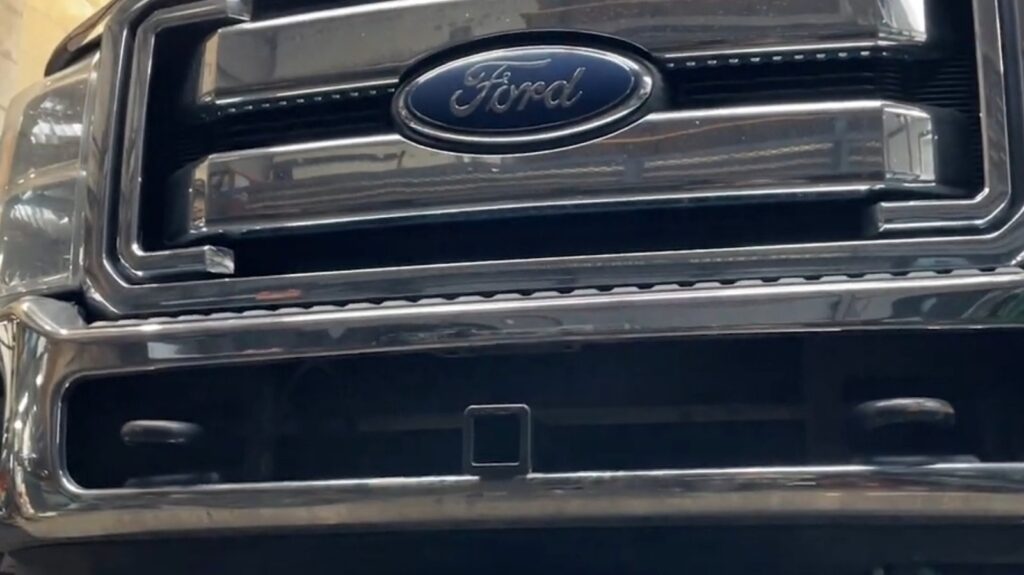
A major reason why folks invest in heavy duty trucks is because of their strength and power, as these roadway beasts are strong enough to haul massive loads with the aid of their hitches. Trailer hitches are staples of truck anatomy, and the rear hitch is the most common form seen on the roads. Some trucks have receiver hitches attached to the front rather than the back, however, and there are actually a few specific reasons why a hitch might be installed this way.
Much like how there are multiple different ways to use a rear tow hitch, there are several ways pickup truck drivers can use the front hitch on their vehicle. At times, a front hitch can help improve the maneuverability of trailers, such as when trying to load a boat onto a ramp. Meanwhile, it can also be used to attach racks for things like kayaks and bikes, saving room in the truck bed for other essentials. Other possible attachments include small personal snow plows, winches, and skid plates.
What to keep in mind when mounting a front truck hitch
There are a few things you should consider before you go out and buy a front receiver. First, you’ll want to make sure you buy the appropriate model that fits your vehicle, ensuring that the connection points where it bolts into the truck work for your truck. For example, the Curt front receiver hitch designed for select Ford F-150 models has a rectangular attachment point on either side, each with two bolt holes. Meanwhile, the Chevy Silverado and GMC Sierra hitch has three holes per side, and the connection points are slanted backward. Even hitches advertised as multi-fit universal models will differ in layout and the number and location of bolt holes, so make sure to do some research before buying.
You will also want to pay close attention to a hitch’s weight limitations, since front hitches aren’t designed to pull the same loads at the same speeds as their back counterparts. This includes the hitch’s vertical load or tongue weight, which is essentially the gravitational force pushing down on the hitch ball. Generally, rear hitches will be able to withstand far more than front ones because they are designed to haul different things. Both of the Curt models mentioned above have a maximum tongue weight of 500 lbs., while some rear models from the same brand for the same vehicles have a tongue weight of 1,000 or 2,000 lbs.
In terms of the gross trailer weight, which will be the heaviest amount you can safely pull, front hitches can also support less than rear ones. Curt front hitches for popular models like the Ford F-150 and the Chevy Silverado tend to top out at around a 5,000-pound limit, while rear hitches can max out at around 20,000 lbs. Finally, you also want to check the receiver opening’s dimensions to make sure all of the hold accessories will fit properly.