Which State Has The Most Wind Turbines, And How Much Energy Do They Make?
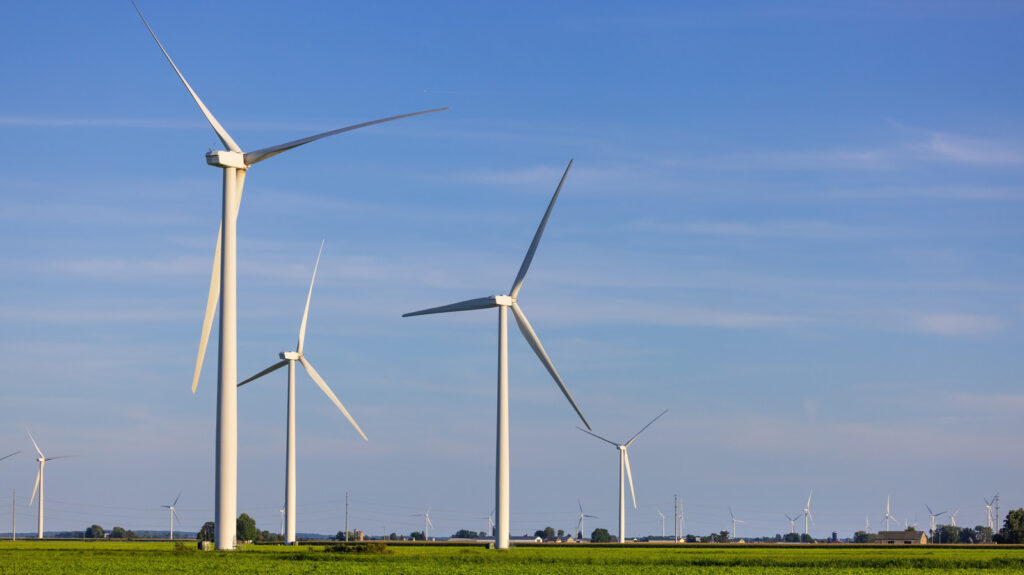
Texas has a reputation for being an oil and gas state, both in terms of production and consumption. Yet few people refer to it as a wind state, although they could. According to a September 2026 release from the U.S. Wind Turbine Database, Texas has 19,943 wind turbines. Overall, the U.S. has a growing fleet of nearly 78,000 wind turbines (not to be confused with windmills). That means a state that covers around 7% of the total area of the U.S., has roughly ¼ of the country’s wind turbines.
The Lone Star State has far more than even the second- and third-ranked states. In fact, even if you added the number of wind turbines in the next three states on the list — Iowa, Oklahoma, and California — together, it would still be fewer turbines than Texas has.
As the largest wind turbine manufacturer in the U.S., GE Vernova makes many of Texas’ supply as well. Together, all of the nearly 20,000 wind turbines in the state generated a whopping 10.7 million megawatt-hours (MWh) of power in July 2026, according to preliminary figures shared by the U.S. Energy Information Administration. That was ⅓ of all the wind power generated in the U.S. that month and enough to power roughly 11.9 million American homes.
Why Texas has so many turbines
You could say Texas is geographically blessed when it comes to wind, which explains why it has so many turbines. The state sits inside a massive corridor that stretches through the middle of the country called the American Wind Belt. Lots of high-velocity wind plus Texas’ open spaces and flat plains are exactly the kind of conditions wind turbines thrive in.
In response, Texas has rapidly increased its wind capacity over the years. In fact, in 2025, it added more new wind capacity than any other state, at 1,718 megawatts (MW). For reference, newer U.S. wind turbines have an average of 3.8 MW capacity per year, according to Berkeley Lab.
The only catch is that the most ideal sites tend to sit in thinly populated areas, which is why, for the generated power to reach cities, long transmission lines are needed. Part of this problem was solved years ago, when the Texas Legislature directed the Public Utility Commission to create Competitive Renewable Energy Zones (CREZ). The whole point was to build transmission lines out to these zones, and today the program operates 3,500 miles of high-voltage transmission lines. That said, the state has to constantly install new lines as new turbines continue to be built.
Where Texas falls short in wind energy
For all those wind turbines, a relatively tiny fraction of the energy generated in Texas actually comes from them. According to Berkeley Lab, just 21.7% of the energy used in the state was generated by wind in 2025. By contrast, Iowa, which ranks second for turbine count (6,514), utilized a whopping 58.5% of its electricity from wind. That’s the highest for any state.
Part of the problem here is related to inconsistency. While Texas has lots of wind, it ends up falling by about 40% in the months of July and August after peaking in March and April. July and August are also exactly when Texans need the most electricity, as its a hot state where residents needs air conditioning. Plus, winds tend to blow harder at night than in the afternoon, which is exactly when the consumption is the highest.
All of this helps explain why only 16.8% of the electricity generated in Texas was supplied via wind in July 2026 — a notable drop over the yearly average. These periods are exactly when other sources like natural gas and solar have to work harder and cover the gap. Otherwise, wind turbines are a fairly reliable source of energy.