Can Anker’s Home Battery Backup Really Power Your Entire House?
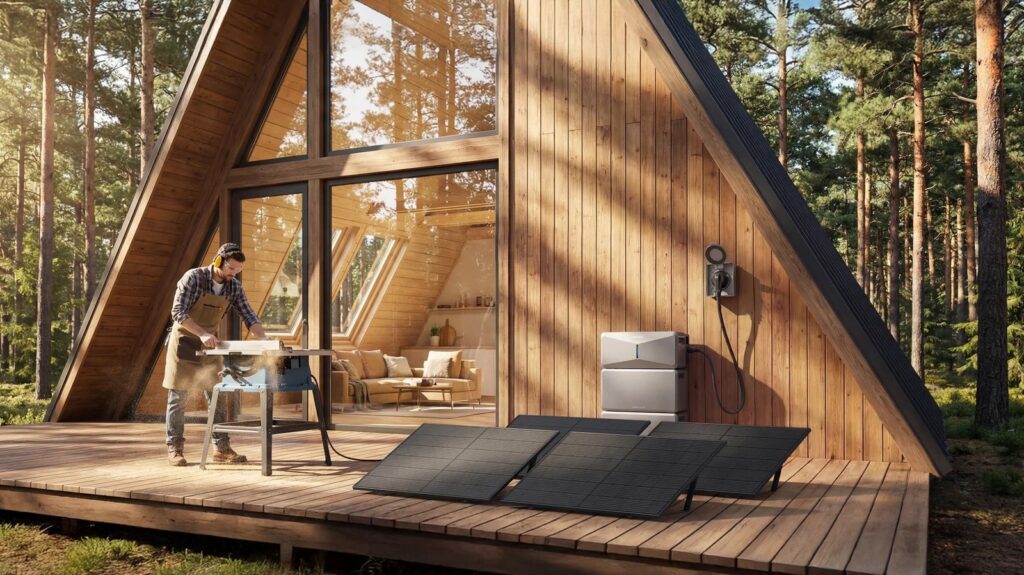
Founded in 2011, Anker has quickly grown to become one of the world’s most recognizable technology companies. Perhaps best known for its range of chargers and power banks, Anker has moved beyond this with an extended product portfolio. However, it’s also scaled its power storage up a notch and now offers home-backup batteries. But can they really power your entire house?
A power cut can be more than inconvenient. Today, our homes are crammed full of digital technology that doesn’t take kindly to being shut off mid-task, or we run the risk of losing that document we forgot to save, and then phones don’t charge, smart devices go down, and… well, you get the picture. Of course, the old problems of fridges, freezers, and HVAC systems haven’t gone away. Luckily, there are tools and technology that you’ll want on hand during a power outage, including an Anker home backup battery system.
So, just how effective would the Anker devices be in such a situation? The EIA reports that in 2022, the average US home used around 30 kWh of electricity a day. A mid-range portable Anker PowerHouse battery backup stores roughly 1.2 kWh; this would be enough to fully power your house, but only for an hour or so. A more realistic option for fully powering your home is Anker’s larger Solix E10 home backup kits. In this case, a single battery unit will provide 6 kWh of power. Still not enough to power your home for a day, but closer to the mark, and these can be scaled up.
Let’s examine the figures more closely and see what you can really expect from an Anker home battery backup system.
Just what can you expect from an Anker home battery backup?
Anker produces its home backup and portable power stations under the name Solix, one of the tech brands that are owned by the company. But just how effective are they at powering your entire house?
To give the Anker system the fairest crack at the whip, we can look at the Anker E10 system; this is a modular system that can run with multiple battery packs. As noted, the basic system stores 6 kWh of power, with each additional battery adding another 6 kWh. A single E10 module can be expanded to a maximum of five batteries for a total of 30 kWh, roughly equivalent to the daily power usage of the average American home. These systems can also be paired with solar panels; so, in the right circumstances, and with one eye on your electricity usage, this could extend the time you’ll get from the pack. However, these kits aren’t cheap, with a basic single-battery setup listed at $3,999 on the Anker website rising to $20,796 for the E10 ultra off-grid kit.
For those of us on tighter budgets, a more realistic option could be the Solix range of portable power stations. These certainly won’t power your house for a day, but they can keep the essentials running. For instance, the Solix C2000 system stores 2 kWh of power, enough to keep an average fridge running for about 12 hours. The news is slightly better on the internet front, with a 2 kWh backup powering a typical router for about 200 hours. The Anker Solix C2000 Portable Power Station is listed on the Anker website for $699.99 at time of writing, down from $999.99.