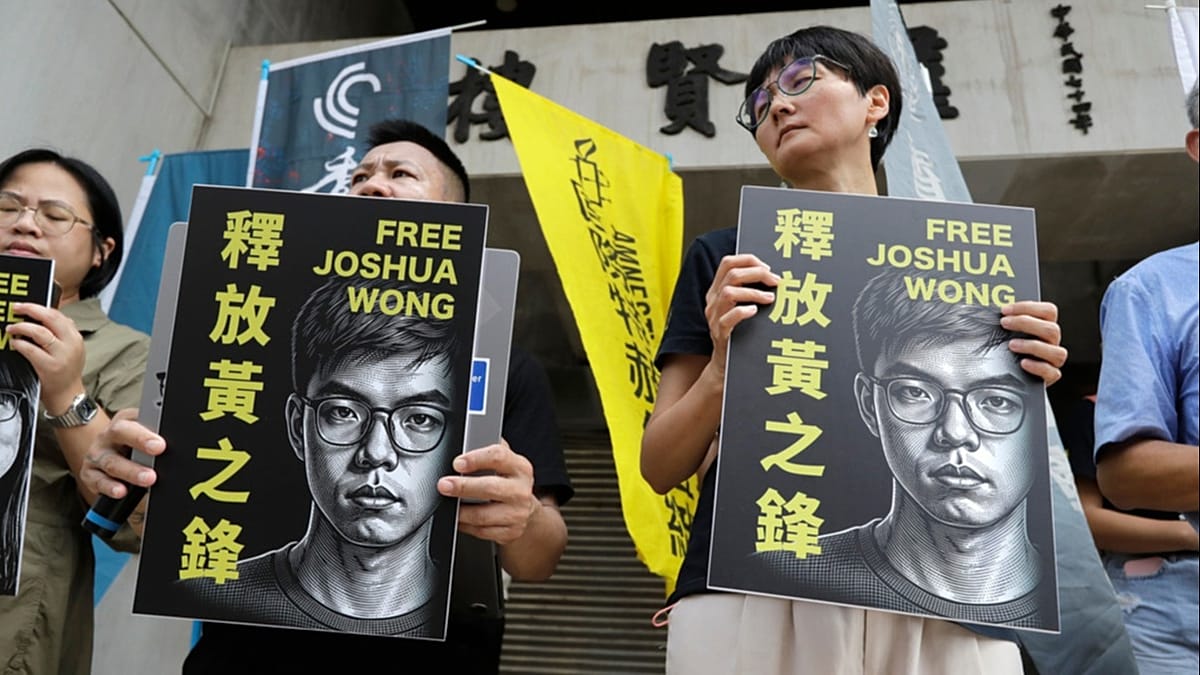
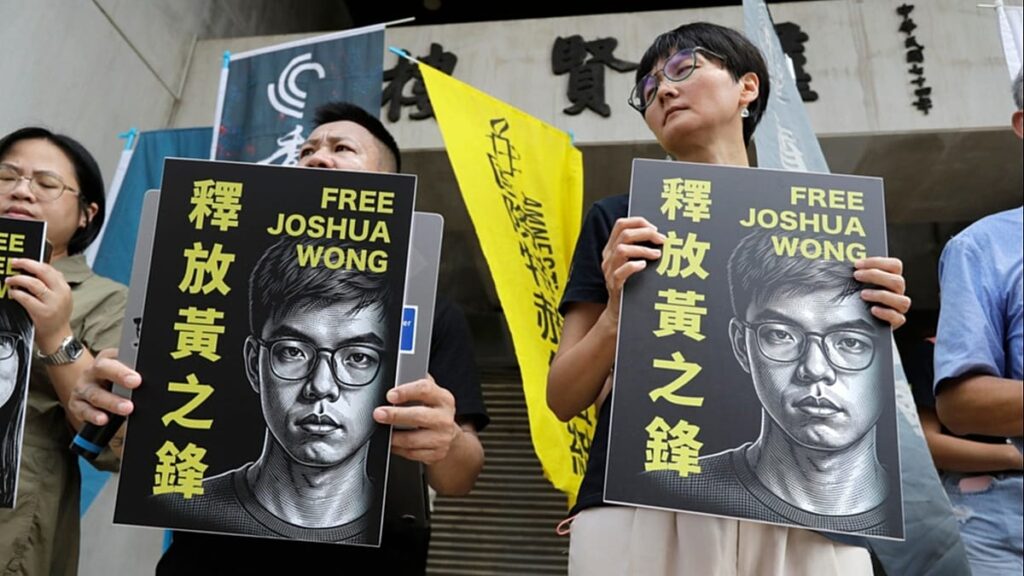
Prominent pro-democracy Hong Kong activist Joshua Wong pleads guilty in second national security law case
Published on
Prominent Hong Kong pro-democracy activist Joshua Wong pleaded guilty on Wednesday to conspiracy to collude with foreign forces to endanger national security under a Beijing-imposed law that has effectively stifled the city’s once-thriving pro-democracy movement.
ADVERTISEMENT

ADVERTISEMENT
It was the second prosecution of Wong – a former student leader in the pro-democracy movement and one of its most recognisable faces – under the national security law introduced in 2020 to quell massive anti-government protests that rocked the city a year prior.
Wong, 29, who wore a blue shirt, appeared thinner as he entered his plea.
He is expected to be sentenced later. The offence is punishable by a prison term of three to 10 years, or up to life imprisonment if the offence is deemed to be “of a grave nature.” Pleading guilty could typically result in a reduced sentence.
He was already serving a prison term of four years and eight months after entering a guilty plea in a separate national security case linked to an unofficial political primary. Before the arrest for the collusion-related offence in June 2025, Wong had been expected to be freed next January.
Critics say Wong’s case showed the authorities’ determination to silence prominent dissidents, and effectively freezing civic activism. But to Beijing, Wong is an anti-China figure who supports Hong Kong independence, a red line for authorities who deem the territory as China’s.
The prosecution alleged that Wong and Nathan Law had agreed years ago to lobby internationally to achieve their goal of democratic self-determination. Before the security law, they and others sought foreign forces to impose sanctions, blockades or engage in other hostile measures against Hong Kong and China, it said.
After the 2020 law took effect, Law and others who left Hong Kong continued their work abroad by meeting foreign politicians and launching petition drives.
Wong supported the effort from Hong Kong through foreign and social media, including sharing Law’s posts, to draw other countries’ attention and “bolster the request for sanctions, blockade or other hostile measures,” the prosecution said.
Prosecutors noted Wong shared Law’s online petition urging digital forensic companies to stop cooperating with police on Facebook after the security law took effect. One company later announced it would stop selling digital intelligence offerings to customers in Hong Kong and China, they said.
Wong confirmed he agreed with the details read out by the prosecution.
Before the hearing, a supporter shouted “Hang in there” to Wong. A friend of his said Wong read books, studied, learned guitar and exercised in prison, exploring new hobbies and new things behind bars. He said he hoped to see Wong outside prison as soon as possible.
In 2012, Wong rose to prominence as a high school student leading protests against the introduction of national education in Hong Kong schools. His fame spread later as a student leader of the 2014 Occupy Movement.
Wong co-founded a political party, “Demosisto,” in 2016 with fellow young activists, including Law, who became the city’s youngest lawmaker that same year.
During the leaderless 2019 protests, Wong helped seek overseas support for the democracy movement, including from the US But Beijing slammed his actions, saying he “begged for (foreign) interference”.
Demosisto disbanded when Beijing imposed the security law in 2020, which authorities branded as necessary to restore social stability.
Additional sources • AP