
After slashing science budgets, Trump bets on Bay Area researchers
Electric vehicle companies and other industries have been scouring the globe for critical minerals for their batteries. Now the Trump administration is funding Stanford researchers to use artificial intelligence to extract these minerals from a new source: old batteries.
After nearly two years of gutting federally supported research and laying off researchers, the White House announced on July 22 that it would invest more than $5 billion in the Genesis Mission, which it describes as “a national mission on AI for science.” The Stanford battery recycling research is just one of 278 nationwide projects, and one of a few dozen in California, benefiting from the administration’s largesse.
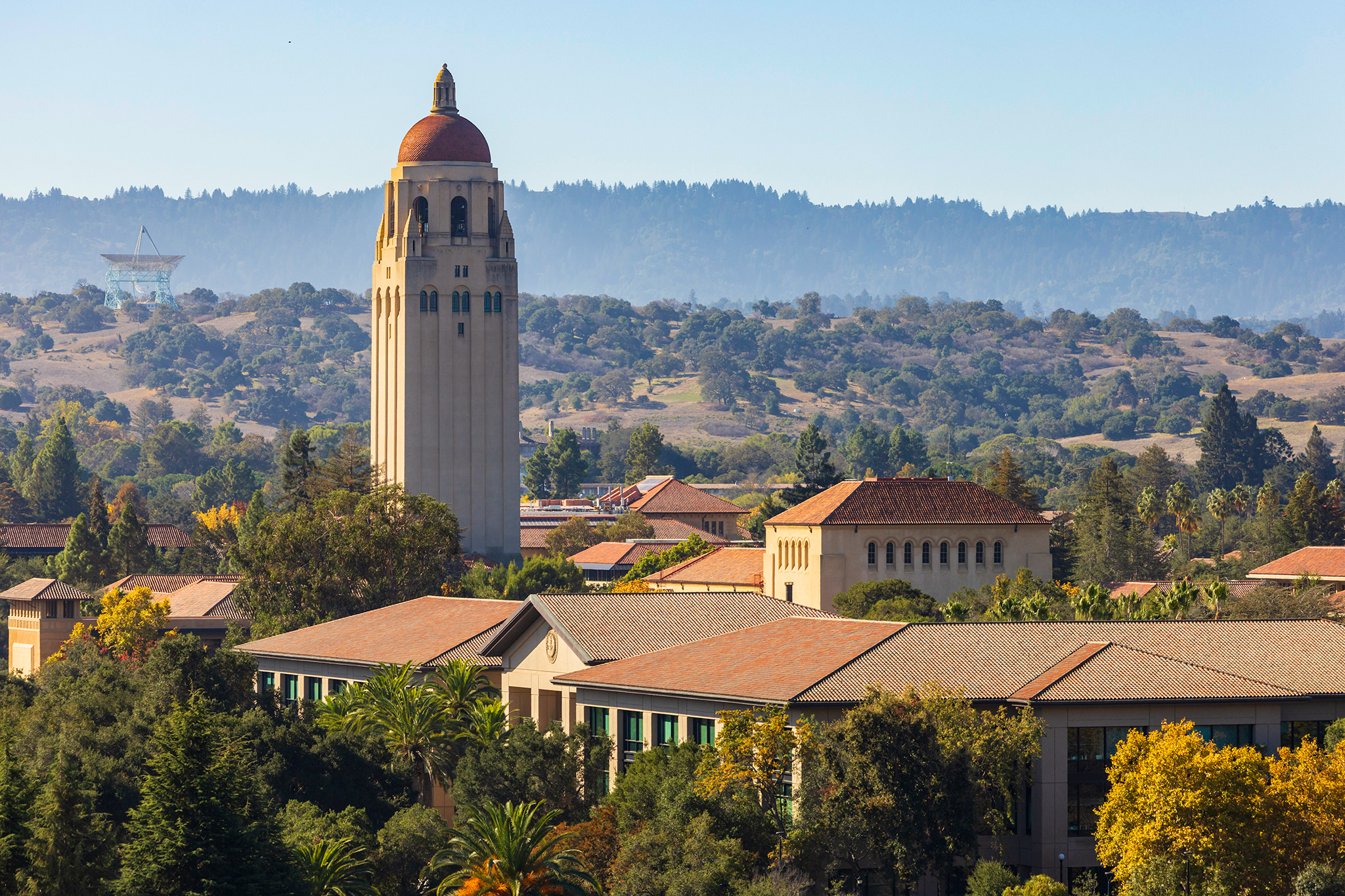
Lead Stanford researcher Irshad Maniyanganam, who has long been working on battery electrochemistry since his college days in Bangalore, India, has ambitious goals for his project. He and his team aim to explore diverse areas of science in the hopes of identifying unique chemical drivers to selectively recover nickel and cobalt from battery waste, rather than importing them at great cost from distant and limited sources like Indonesia and the Democratic Republic of Congo. His research team is one of many in California that are winning funding from the federal government, which otherwise has appeared to target the state by withholding research grants and funds.
Article continues below this ad
Finding the right kinds of chemicals to retrieve those minerals from battery waste will be difficult, however. “The answer may be in physics or biology or medicine or geology,” Maniyanganam said. “It’s a Herculean task.”

FILE: Battery cells placed for shipment at the battery manufacturing plant at PT HLI Green Power, Indonesia’s first electric vehicle battery cell manufacturer, in Karawang, West Java.
That’s where AI comes in — Maniyanganam said he believes it will speed up that process. He and his colleagues start by designing an AI agent to search published studies in many fields beyond the battery-focused research he’s familiar with. After another AI agent reviews the results of that search, they run experiments on the candidate chemicals, and not just AI modeling, to see which might be most effective at sifting out nickel and cobalt.
“We are not blindly doing AI, but we have all these experts coming in,” Maniyanganam emphasized, describing his research team. He sees their work as a crucial step toward turning recycled batteries into a source of critical minerals.
Article continues below this ad
The project, which brings together researchers at the SLAC-Stanford Battery Center and USC, starts with Maniyanganam and his colleagues trying to achieve a proof of concept. If they have a successful start, they plan to expand the scope and scale of their process, to prepare it for industrial applications.
Researchers at many other California-based institutions have also received the green light for their own various Genesis Mission projects, including at Lawrence Livermore National Lab, Caltech and UC Santa Barbara. Berkeley Lab researchers won funding for 13 projects, one of the highest totals for any institution in the country.

FILE: A view of the PT Vale Indonesia nickel plant, in Soroako, South Sulawesi, Indonesia.
These include a project, separate from the Stanford one, that involves looking for new methods for extracting critical minerals from the ground. Carl Steefel, an energy and Earth scientist who heads the project at Berkeley Lab, said he believes their investment in AI-based modeling will help them efficiently find undiscovered ways of leaching out nickel, copper and other metals, rather than using traditional, time-consuming techniques.
Article continues below this ad
“Here the idea behind AI is to facilitate and drive this 100 times faster than can be done with conventional approaches,” Steefel said. “The old boys would’ve gone out there and done a field test.”
Genesis Mission plans
The Genesis Mission grew out of President Donald Trump’s November 2025 executive order, which presented the program as “a national effort to accelerate the application of AI for transformative scientific discovery focused on pressing national challenges.” Led by the Department of Energy and other federal agencies, the program aims to tackle themes of energy dominance, discovery science and national security and lays out a series of “national science and technology challenges” through the funded projects. These challenges align with many of the administration’s usual priorities, such as securing critical minerals, supporting energy infrastructure and data centers, and expanding nuclear energy deployment, while promoting AI-related solutions.

FILE: At the Department of Energy, Undersecretary Darío Gil oversees the Genesis Mission and foresees an “AI revolution” that will have a substantial impact on research.
At the Department of Energy, Undersecretary Darío Gil oversees the Genesis Mission and foresees an “AI revolution” that will have a substantial impact on research.
Article continues below this ad
“I don’t think there will be a single area of science and engineering that is not going to see a fundamental transformation” because of AI, he said, likening it to how the internet changed almost everything over the past three decades. Gil sees AI having massive potential through multiple steps of the research process, from generating hypotheses to running experiments to sharing findings with the community.
At the same time as the White House’s announcement, the Department of Energy announced more than $800 million in additional funding from commercial partners. These include prominent AI and tech companies such as Microsoft, Intel, Nvidia, Google Public Sector, Palantir and OpenAI (though a few heavyweights, like Anthropic, Meta and xAI, are missing from the list).
The Stanford, Berkeley Lab and other Genesis Mission projects received grants of $500,000 to $750,000 for a period of nine months. For projects advancing to the second phase, there’s more funding at stake, $6 million to $15 million over a three-year period. That exceeds the size of many federal agency R&D grants.
Article continues below this ad
At a July 22 summit in Washington, D.C., Gil and other federal officials spoke to Steefel, Maniyanganam and hundreds of other researchers about their ambitions for the Genesis Mission.

FILE: Workers produce new energy vehicle batteries on the production line of Huating New Energy Technology Co. Ltd. in Liuzhou, Guangxi, China, on Sept. 8, 2025.
“It was mostly to hear the motivational talk, almost like a pep talk, to present coherently the vision of Genesis,” Steefel said. “They were impressing us that this was like the Manhattan Project in a way,” referring to the 1940s nuclear R&D program that developed atomic bombs dropped on Japan at the end of World War II. (In addition to being a specific wartime effort, the Manhattan Project had a much more massive budget than the Genesis Mission — about $30 billion in 2026 dollars — and it employed more than 130,000 people around the country.)
What’s funded and what’s not
With the Genesis Mission and the places it’s funding, the Trump administration hits many of the same priorities as the AI and fossil fuel industries, whose leaders are close to the White House. President Trump and his top science and tech advisers and Bay Area venture capitalists, David Sacks and Michael Kratsios, frequently meet with leaders of the AI and tech industry, including OpenAI CEO Sam Altman, Oracle co-founder Larry Ellison, Nvidia CEO Jensen Huang, Meta founder and CEO Mark Zuckerberg, Google CEO Sundar Pichai, and SpaceX and xAI Elon Musk.
Article continues below this ad
Department of Energy Secretary Chris Wright, who previously described “global energy poverty” as a greater threat than climate change, is himself a former fracking executive who also attended UC Berkeley for a period. A few other officials at the agency previously worked at Denver-based Liberty Energy, the oilfield services company he led.
The Genesis Mission grants fund research on numerous types of energy, from nuclear and fusion to geothermal and hydropower, but solar and wind power are notably excluded. Despite those omissions, such renewable energies are indirectly related to Genesis Mission-funded research involving the electricity grid, Gil said, who described solar and wind as “more mature” and therefore not in need of R&D funding as much.

FILE: An aerial view of salt evaporation ponds on Bristol Dry Lake, where Standard Lithium Ltd. is preparing to capture lithium from brine that is being drawn for evaporation to produce industrial minerals on Nov. 30, 2022, near Amboy, Calif.
The Genesis Mission’s focus on AI, and especially the AI products of private corporations, could pose additional challenges, argued Ranjit Singh, director of the AI on the Ground program at the Data & Society Research Institute. It could end up narrowing what’s considered appropriate research, he said, with some fields that don’t lend themselves to computational analysis, like ecology, left out. In addition, leaning into a more widespread use of private AI products clashes with the openness and transparency in which science traditionally flourishes.
Article continues below this ad
“The more it becomes proprietary, the more challenging it becomes to do that research,” Singh said.
The Trump administration’s largesse comes in stark contrast to sweeping budget cuts imposed by the formerly Musk-led Department of Government Efficiency. Before it officially ended last month, DOGE laid off thousands of federal researchers and cut billions of dollars of grants and programs in 2025, across almost every research and development-oriented agency, including the Department of Energy. The administration is seeking billions of dollars of additional cuts this year, and science advocacy organizations accuse the administration of political interference in science research and spreading misinformation.
Observers like Julie McNamara, the Union of Concerned Scientists’ federal energy policy director, see value in Genesis Mission projects moving forward, but also question it in this context. “It’s impossible to separate out this initiative from the broader ways that the Trump administration is systematically destroying the foundations of the US scientific enterprise,” she said.

She also pointed out that what is being advanced by the Genesis Mission seems to be closely aligned with the administration’s “very limited perspective,” such as what the president refers to as “energy dominance,” which so far does not include renewable energy technologies or reducing fossil fuels, she said.
Article continues below this ad

FILE: A worker moves empty boxes of battery cells at the battery manufacturing plant at PT HLI Green Power, Indonesia’s first electric vehicle battery cell manufacturer, in Karawang, West Java.
Gil understands that some people may be baffled by the Genesis Mission after so many budget cuts and layoffs. He said he hopes that even people who find much to disagree about with the government will ultimately celebrate this and say, “I may not agree with this or that, but the Genesis Mission is actually a really good thing that America needs to succeed at.”
“Citizens, like scientists, should have a skeptical mind and a critical mind,” he said. “But they should also have an open mind.”